

“They can sit here in complete safety… It’s a really great place… you can come out here just like this and be totally dry, it’s a great area.” Skip says about a small covered bench space just in front of the wheel; he is dressed in a light sweater and shorts. I laugh as I watch the video tour of Amundsen’s sister ship, Vinson of Antarctica; nearly impossible to imagine being comfortable in the benched area that the founder of the Antarctic sailing expedition project is referring to.
Maybe that is due to the fact I am watching the video on my laptop in a small cabin in Fairbanks, Alaska while it is -30 degrees Fahrenheit outside and I am wondering how the hell to pack for this trip. Before this, I had never been on a sailboat, let alone sailed across the Drake passage to Antarctica and lived in the boat during a 5-week field campaign to install a permanente low-frequency acoustic monitoring array… yet now we find ourselves as customers chartering the 23-meter long sailing vessel, Amundsen as support for our team of five – 4 engineers from the University of Alaska Fairbanks Geophysical Institute and 1 United Nations member from the Comprehensive Nuclear-Test-Ban Treaty Organization (CTBTO) in Vienna, Austria who is getting married just one week after our expected return.

The UAF and CTBTO team. Photo Credit: Kate Schnippering.

Greg conducting business from the covered bench space. Photo Credit: Kate Schnippering.

Amundsen near Palmer Station. Photo Credit: Tony D’Aoust.
In the first week of February the installation team arrives in Ushuaia, Argentina. We run around town grabbing the last bits of our gear until the time arrives to move onto the ship while the crew is loading the Amundsen’s forepeak with fresh fruits and vegetables and packing two whole lamb carcasses for the journey. “We better get two more of those.” Skip suggests. We help move the crates of veggies into the boat and pack our luggage into our shared bunk rooms.
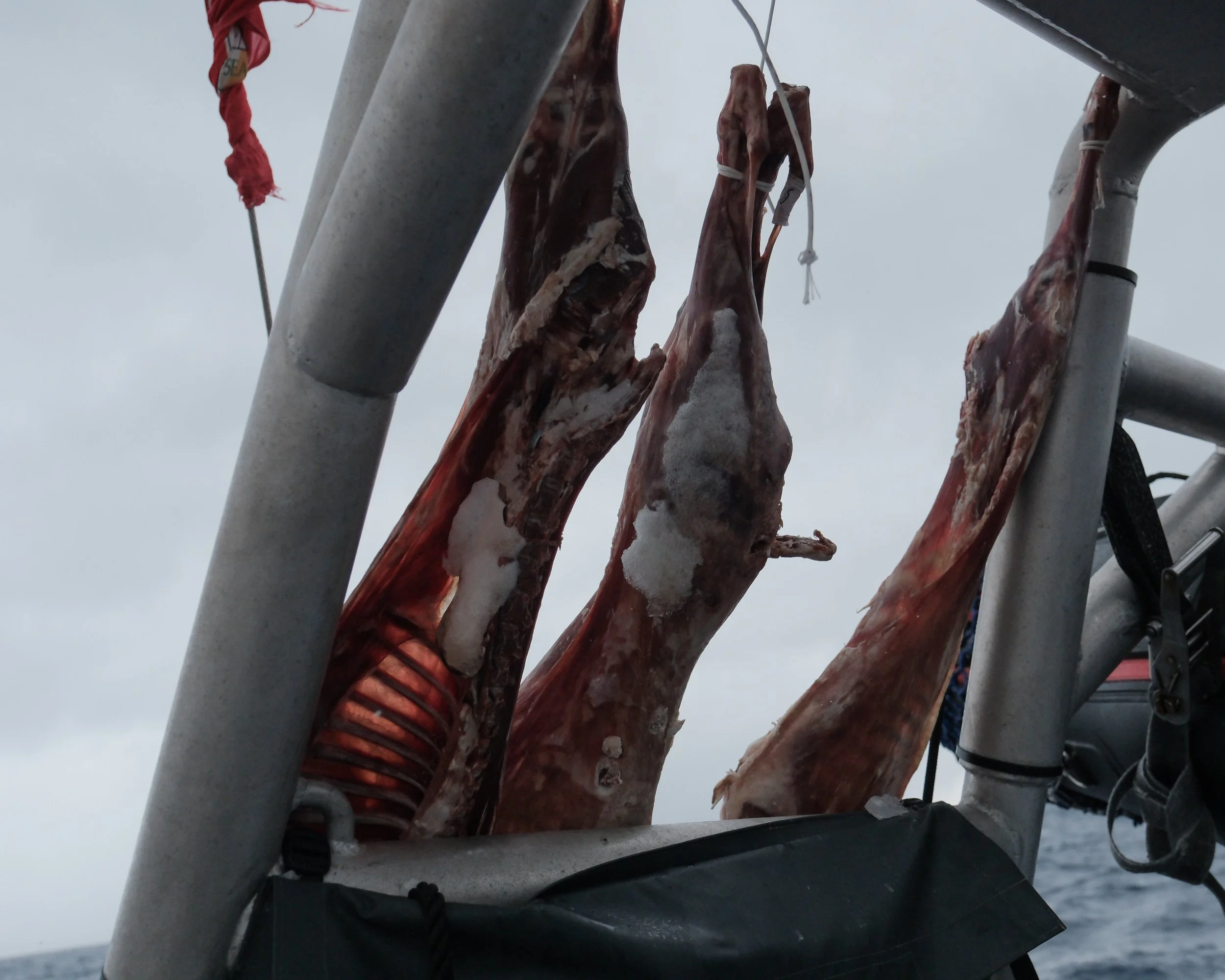
Lambs hanging from the gantry, preserved by the cold salt air. Photo Credit: Kate Schnippering.
The next afternoon we set sail from Ushuaia. “We are going to be part of the watch?” Our facial expressions betray us with excitement, intrigue, and small amounts of anxiety while Skip points out the 3-hour rotating watch schedule that we all take part in as we sail through the Beagle Channel in tandem with the Vinson. After dinner, I check the schedule and note I’m on the third watch team; our first watch period is Midnight to 3 am.
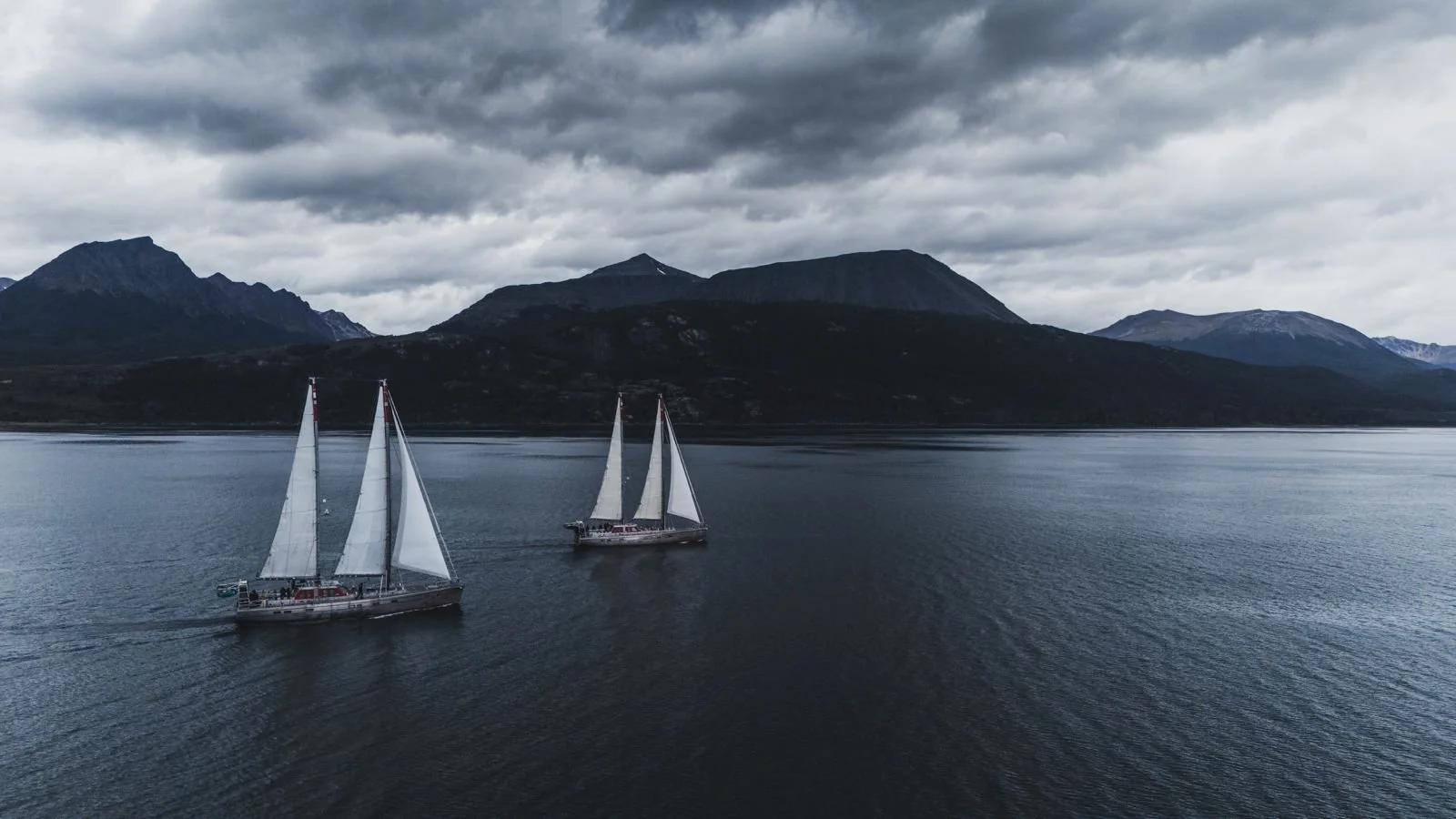
Amundsen and Vinson side-by-side in the Beagle. Photo credit: Chris Kobusch.
“I guess I should get some sleep before then?” I mutter.
“That’s probably a good idea.” Replies Tor, our young skipper who flew in earlier that day. I chuckle, I had not realized he was listening. His reply sounded a little more serious than I expected; I climb into my bunk just after 8pm; we turn south towards the Drake.
Fighting sea-sickness for a few days, we find ourselves out on the deck often, tracking the horizon from the covered benches described in Skip’s video-tour; truly a safe haven from the elements, with nothing more than a light puffy jacket on –damn, he was right! Eventually we gain our sea legs and try to help the crew out with cooking duties and manipulating the sails, more or less successfully, reinforced by the fact that all the prepared meals get eaten and the ship cruises south averaging 5-8 knots. Our southbound Drake crossing is a mix of 8-20 knot winds, excellent for motor-sailing, with only one eventful evening; as we are just shy of 60 degrees South latitude on the 10th of February, the winds pick up to 35 knots at 135 degrees midway through the last hour of our 9pm to midnight watch. In blowing snow and sea spray the two Amundsen crew members on third watch gear up, head onto the foredeck and unfurl the storm sail. With 2 reefs in the main and mizzen we cut the engine and maintain a steady 8+ knots heading 210 degrees. Having experienced my share of the fun, and with the sea categorized as ‘rough’ I head to my bunk as the members of watch 1 relieve us. Before I’m asleep I hear the sound of glass shattering; I don’t rise from my bunk to investigate, instead I learn the next morning that the broken glass was the protective cover of the analog barometer getting bucked off from the wave action and shattering on the stairs. Before long, a plastic leftovers container from the kitchen is repurposed as a replacement. A near-perfect fit. The rest of the crossing is comparatively benign until we start to see land again and dodge a bit of brash ice. The weather cooperates and we hop out on deck to gawk at the glaciated peaks of the Neumeyer Channel and Gerlache Strait. “What a treat.” Skip would say.
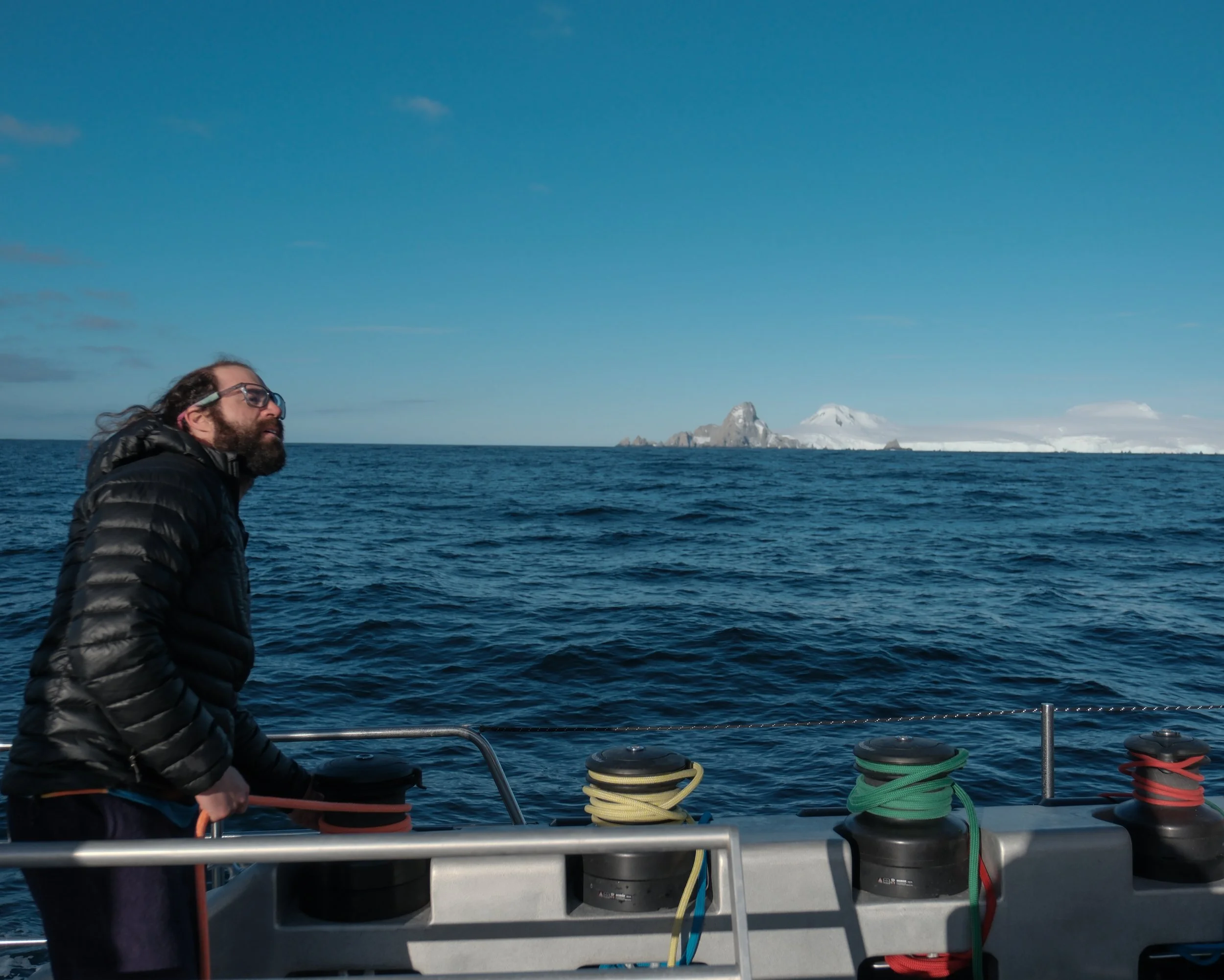
Matt trimming, approaching Antarctica - Kate Schnippering.

Riley and Jay on the coffee grinder. Photo Credit: Skip Novak.
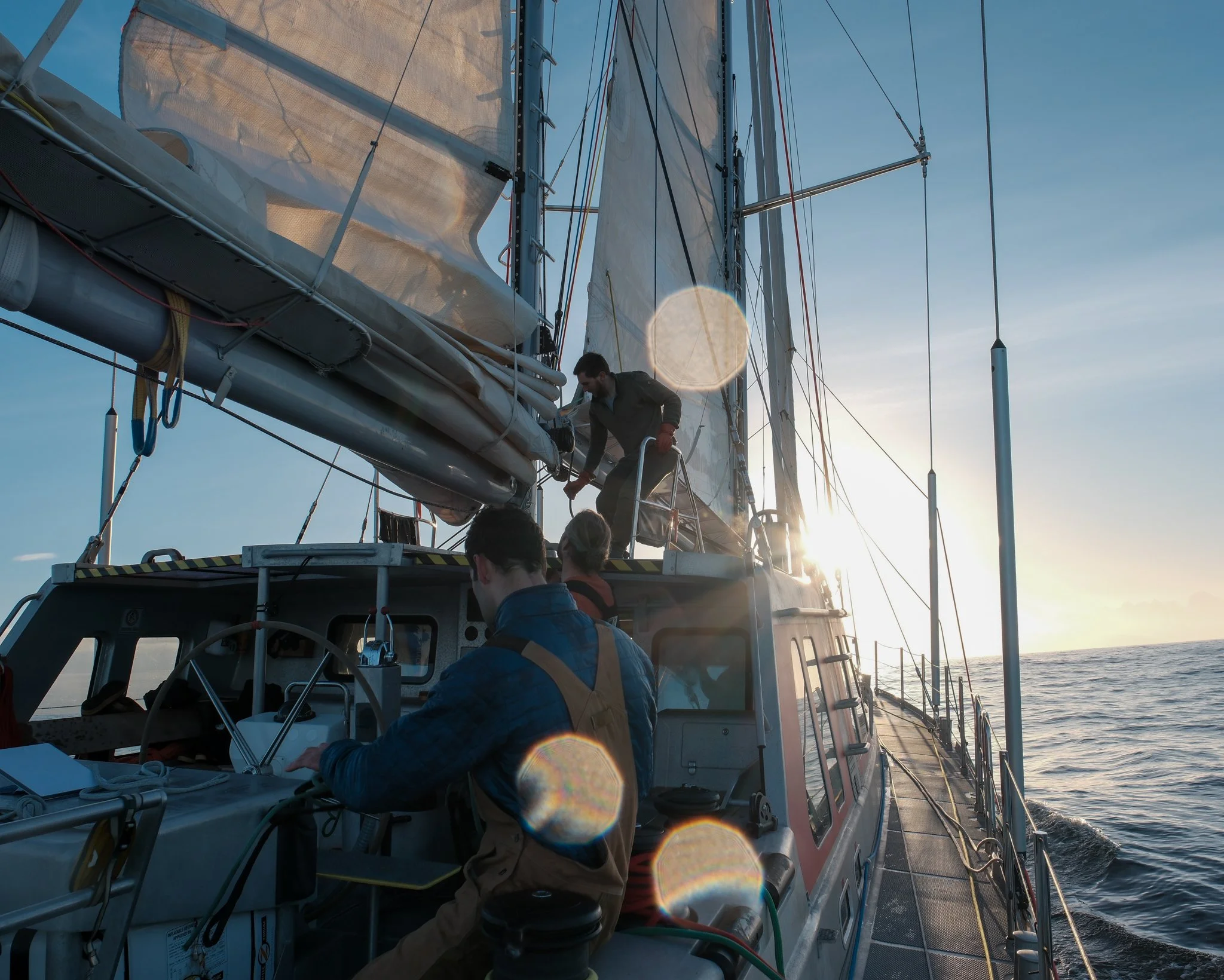
Raising sails. Photo Credit: Kate Schnippering.
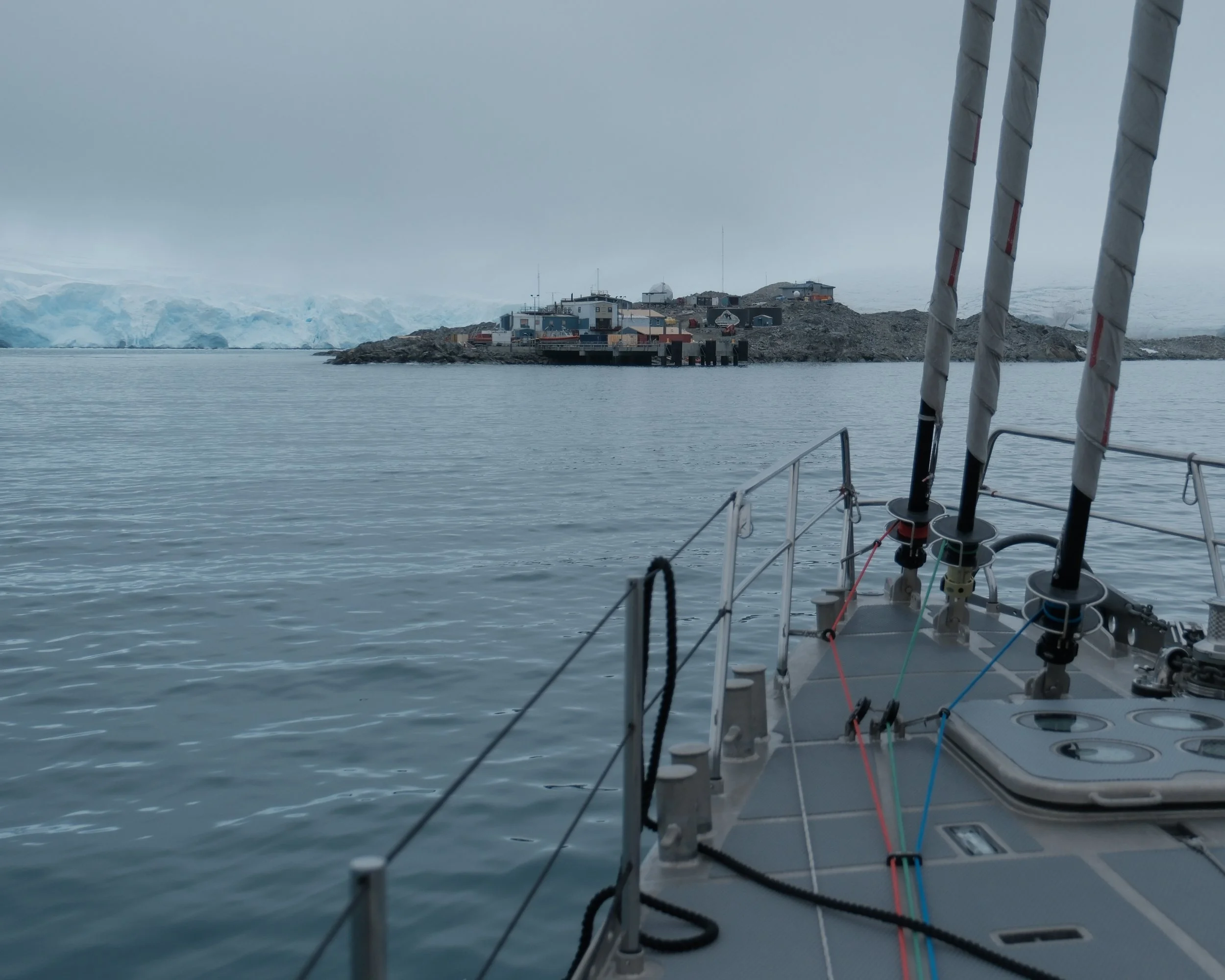
First sight of Palmer Station. Photo Credit: Kate Schnippering.
“Splash. Snort.” We turn and look out from the back deck in awe at a gleaming leopard seal swimming up to the ship, welcoming Amundsen, her crew, and passengers into Hero Inlet. As Amundsen motors slowly by the Palmer Station pier the ship crew act on muscle memory readying shorelines and guiding us (the passengers) in lowering and flaking the main and mizzen sails. The crew have an intricate way of including everyone aboard the boat in the sailing of the ship – they instructed and guided us with confident direction, and not to mention the utmost patience, throughout the entire journey from Ushuaia to Anvers Island.
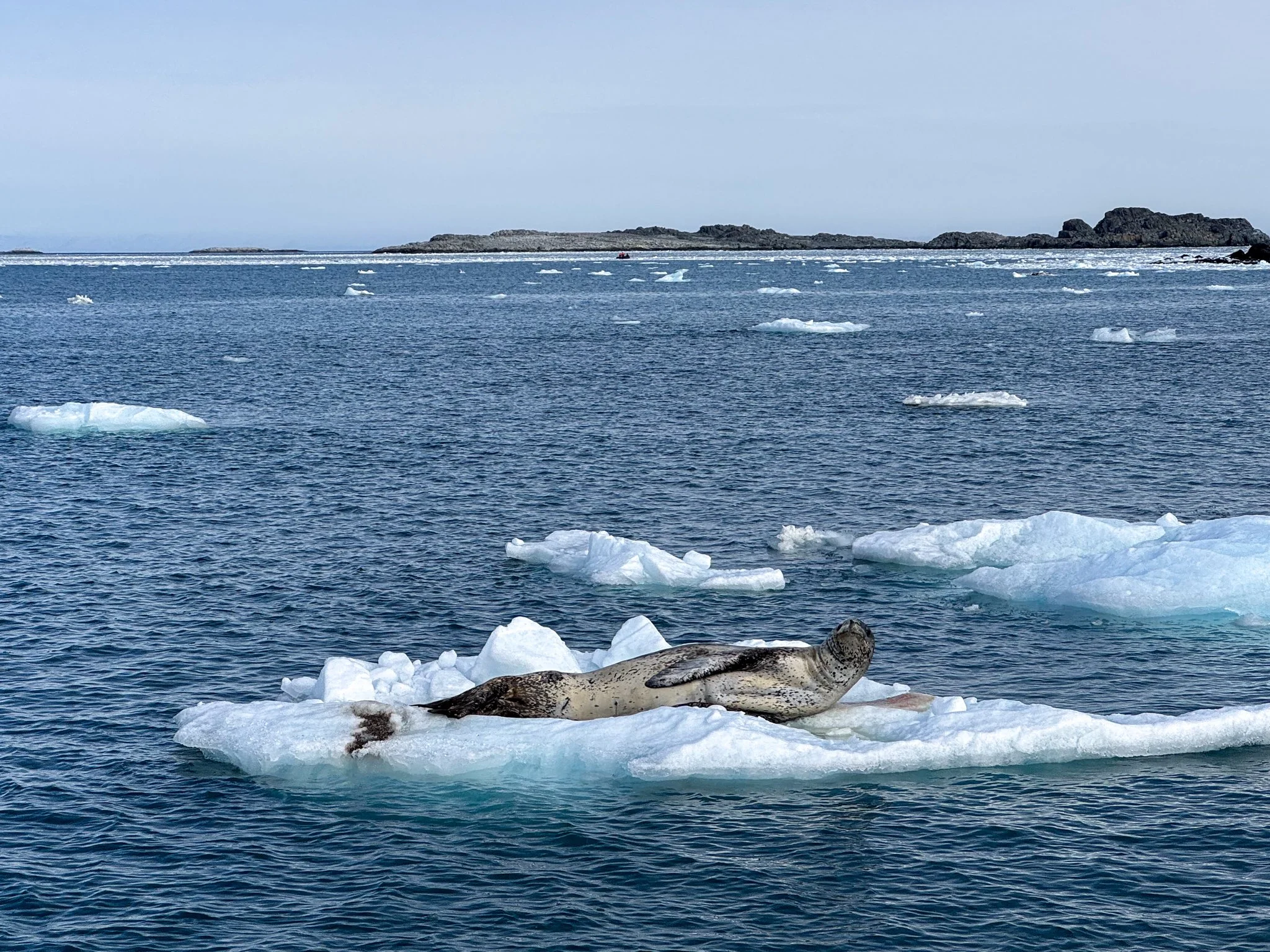
Leopard seal on an ice floe drifting by Amundsen. Photo Credit: Kate Schnippering.

Luca heading for a shore pickup. Photo Credit: Tony D’Aoust.

Riley and Matt kayaking. Photo Credit: Tony D’Aoust.
After lunch aboard the Amundsen we head to the floating dock at the Palmer shore loaded up in the zodiac and one inflatable double kayak. We check in at the station and greet the station manager; shouldn’t it be the other way around? Unamused at our arrival, we get on with our business. We understand it may have been a blessing in disguise to be self-supported along with the Pelagic crew, just outside of the USAP’s grasp.
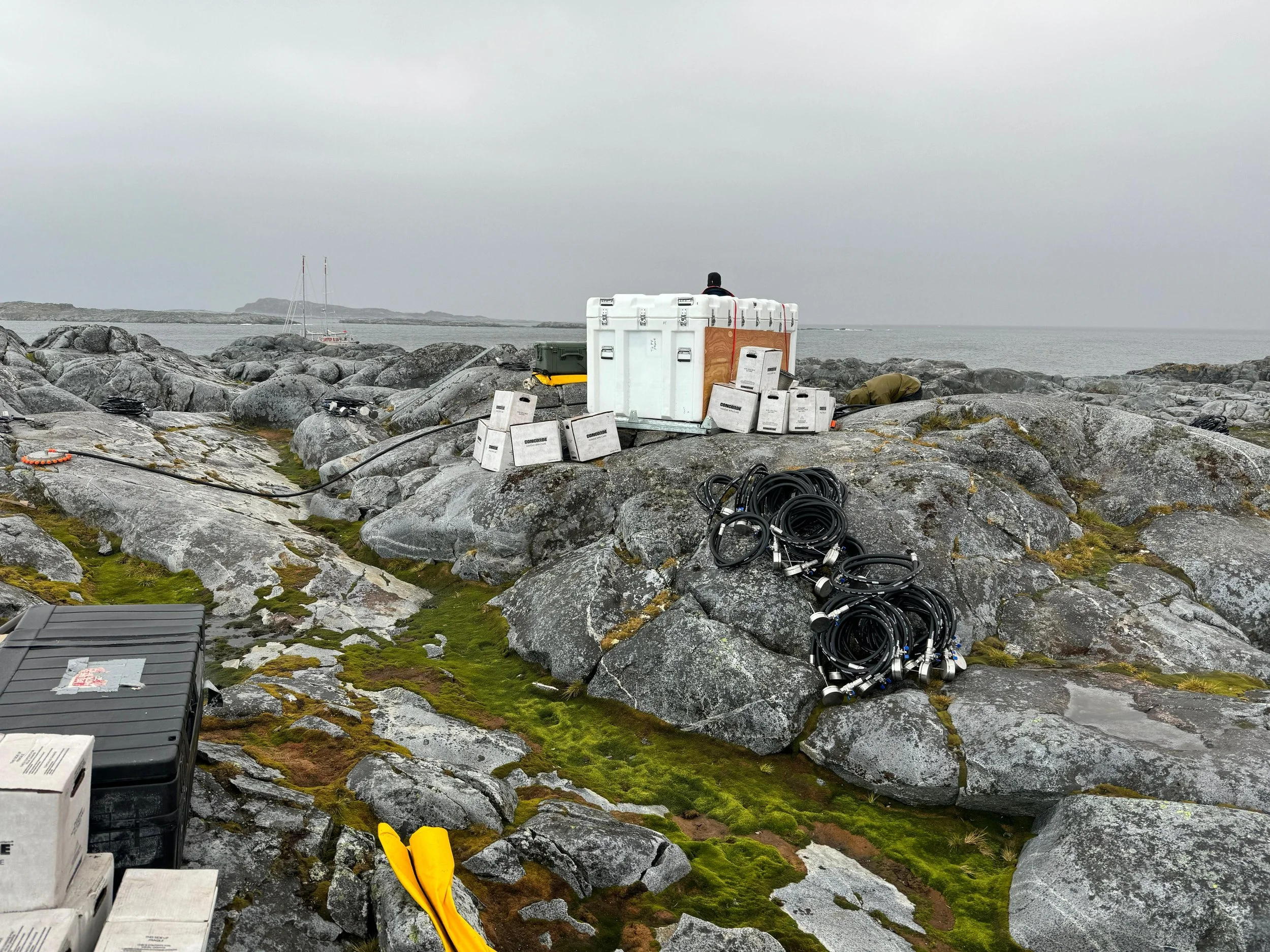
Staging Site 4 on a drizzly day. Photo Credit: Matthew VonLintig.
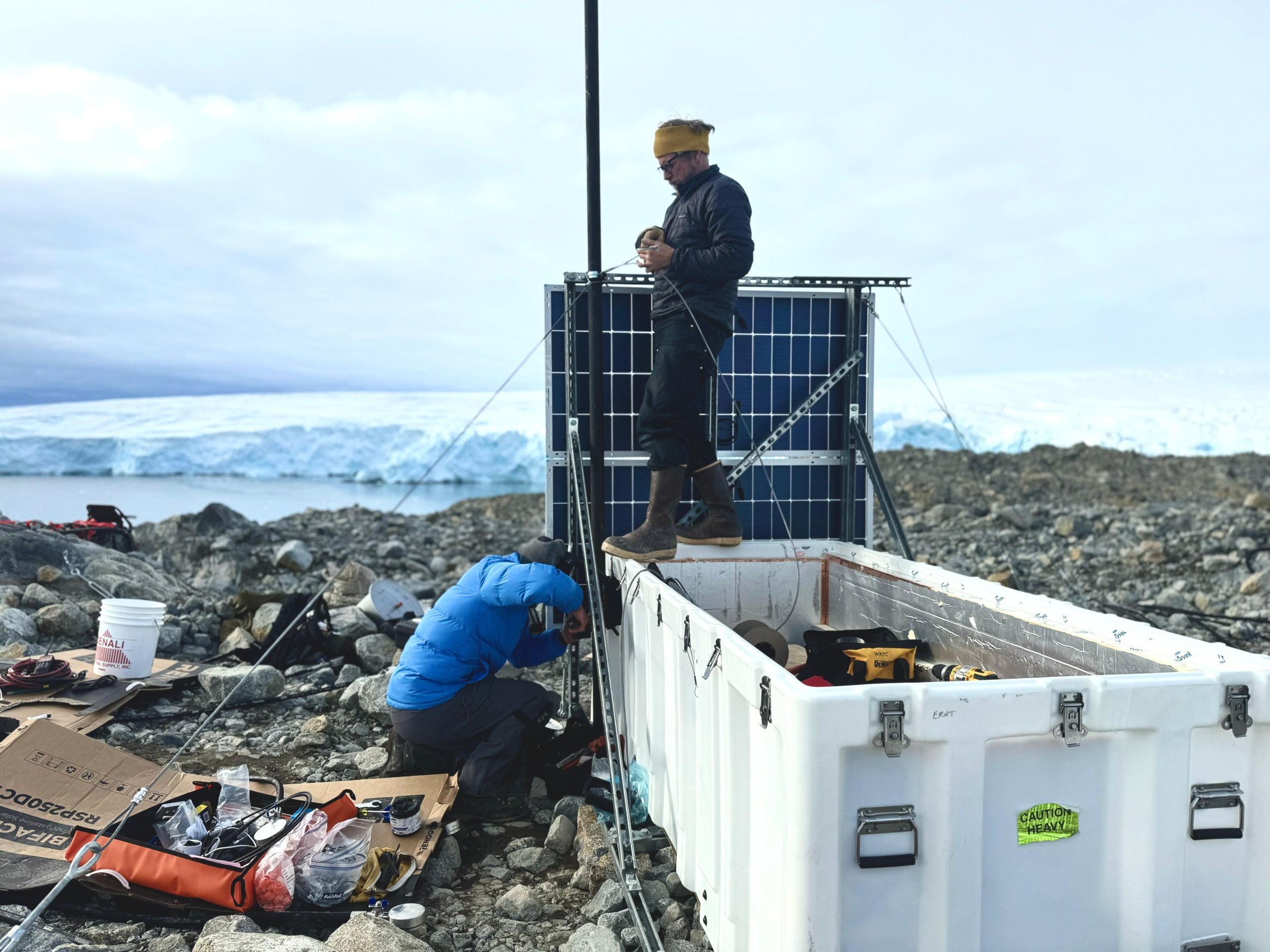
Riley and Tony at work on Site 2. Photo Credit: Matt VonLintig
“Now, it’s our turn to do all the work…” we mistakenly think, as we begin to locate and organize equipment and tools. The Pelagic crew aboard Amundsen (consisting of one Brit, a Canadian-American, an Irishman, and two South Africans), however, were incredibly keen to boot up with us every single day (20 days anchored off the Palmer shore) to help us carry our 8’x3’x3’, 250-pound Hardigg cases, twenty-four 67-pound lead acid batteries, and hundreds more pounds of steel Unistrut, hardware, and solar panels to each of the four installation sites.
Not forgetting the rock drill, Skilsaw, grinder, drills, and two generators to power these tools at each work site. It’s not exactly what they’re paid to do, and we didn’t expect them to be as excited as they were about gear-hauling and rock moving (local rocks are used to help landscape the area, anchor equipment, and collected into small rock piles which serve as added wind-noise reduction for the pressure sensors – of which there are 96 inlet ports spread over 18 square meters). To one of our sites, in the Palmer Station “backyard”, we estimated each battery took about one man-hour just to get to the site. Without the help we would’ve been cooked; with the help of the crew we got all the equipment to that site in less than 2 days.
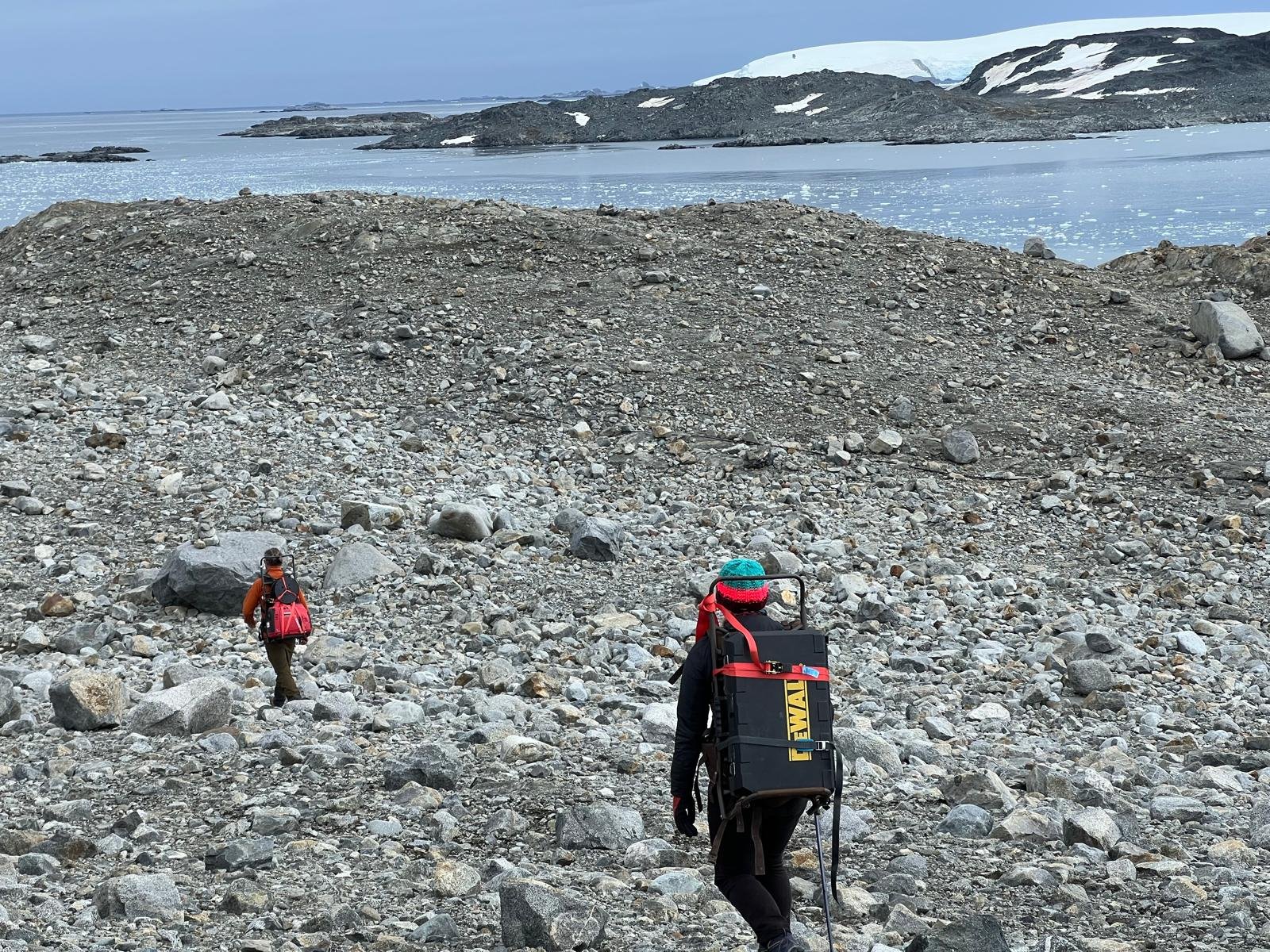
Kate and Eoin load carrying to one of the sites. Photo Credit: Tony D’Aoust.
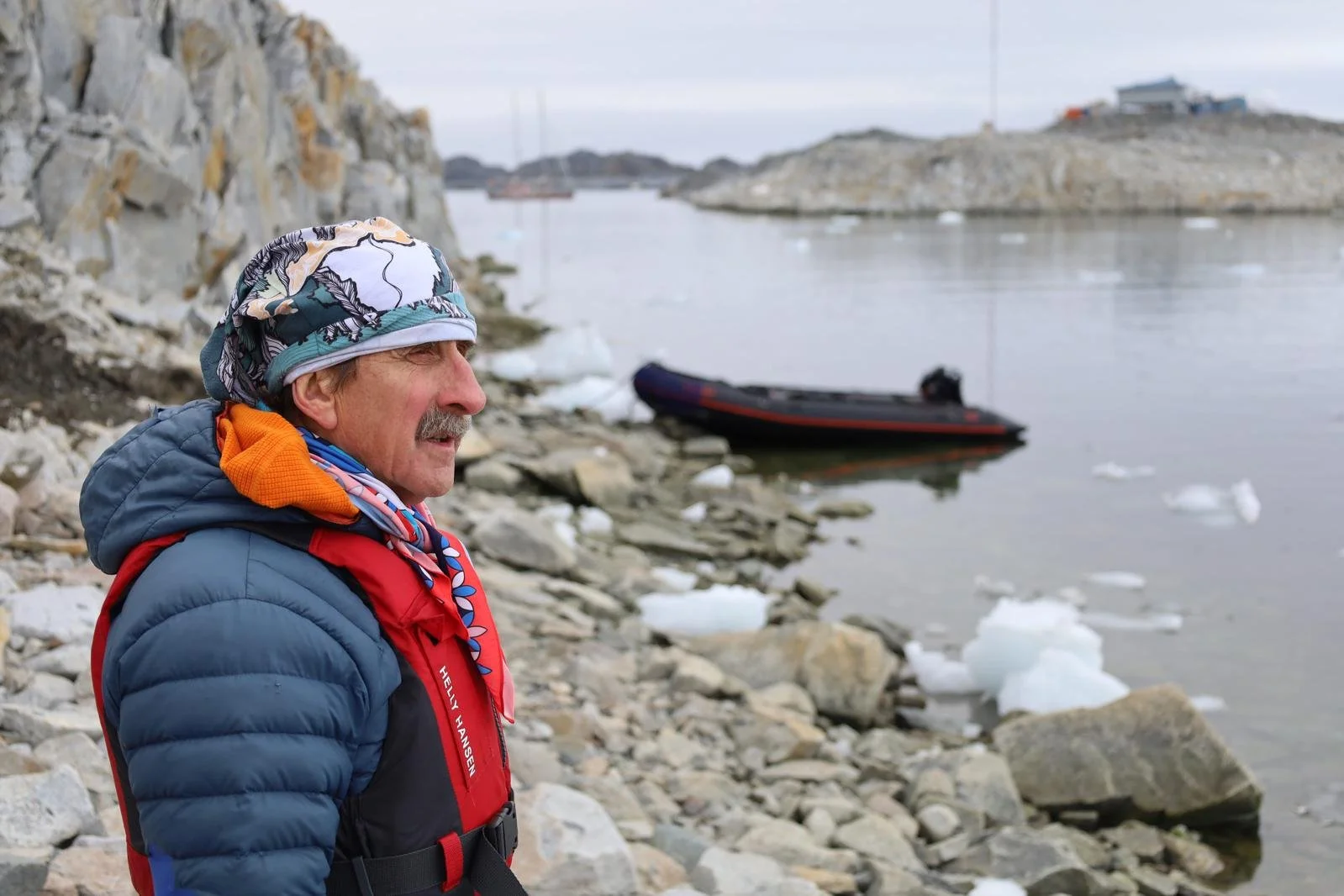
Skip scouting site logistics. Photo Credit: Tony D’Aoust.
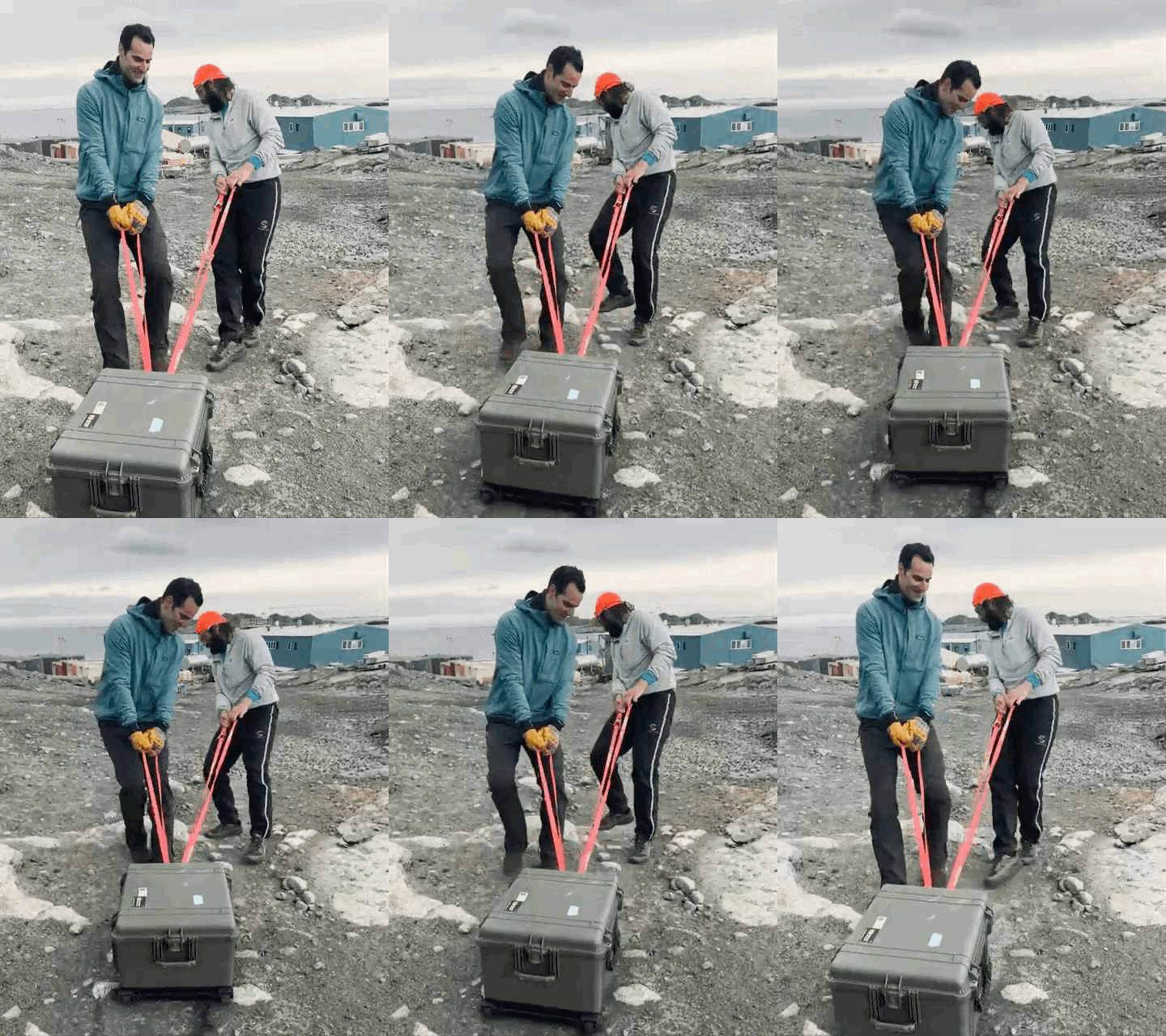
Two sled dawgs towing 400lbs of metal. Photo Credit: Kate Schnippering.

Tor setting up rocks and hoses. Photo Credit: Skip Novak.
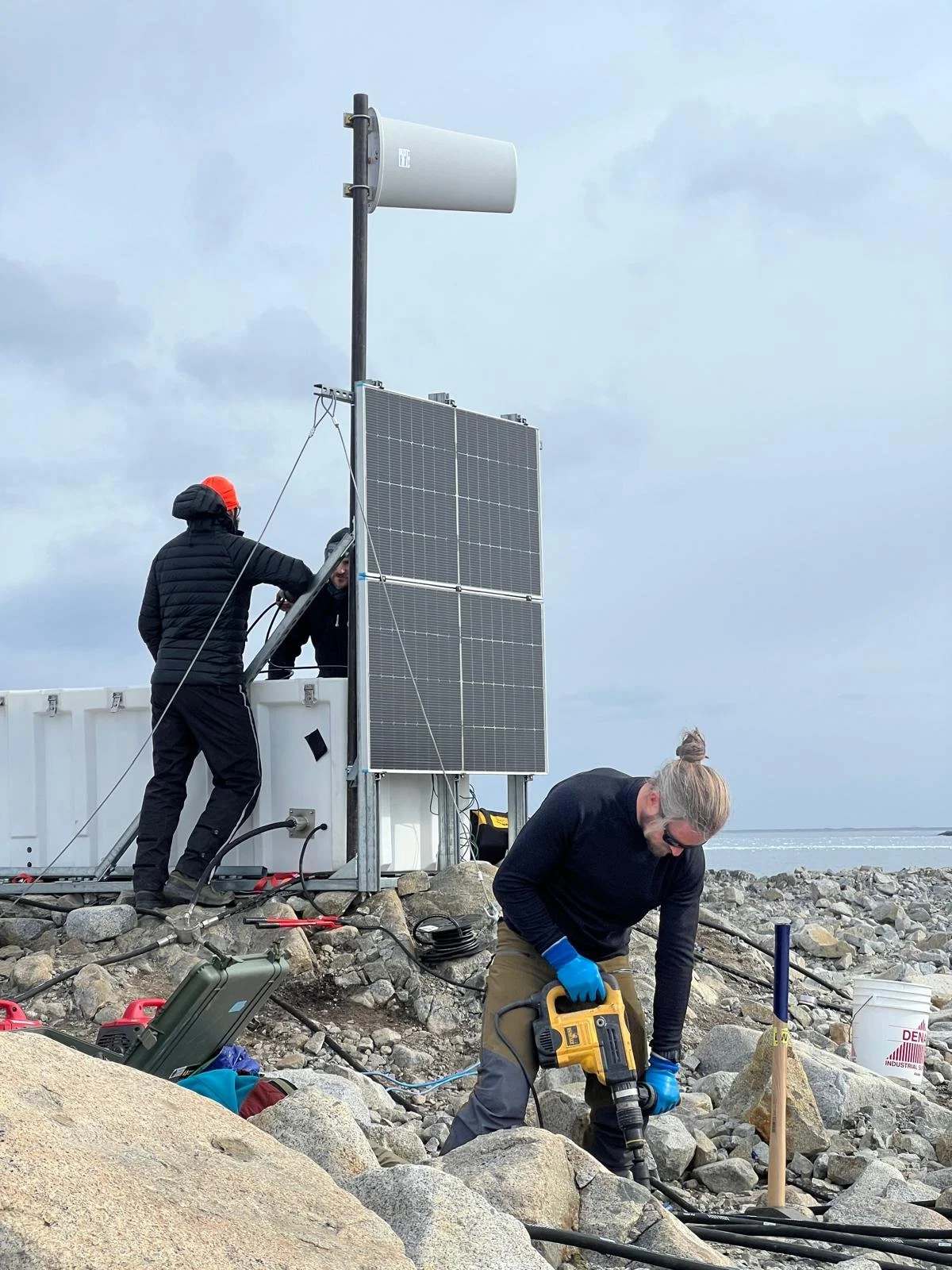
Eoin drilling rocks. Photo Credit: Tony D’Aoust.

Walking between Site 3 and 2 via the glacier. Photo Credit: Kate Schnippering.
We settle into the swing of things more with each day: breakfast, zodiac ride to shore nearest the day’s work site, back to the boat for lunch, back out to work until we retire from the weather or the radio call sounds for dinner. Most evenings upon returning to the ship we again find ourselves out on the covered portion of the back deck, a safe haven no matter the weather. Once everyone is aboard and a meal is prepared, the bell in the pilot house is rung as a ceremonial notice that it’s time to gather in the galley. We eat in family style, all ten of us seated around the two tables, serving out portions and passing plates down the line. In addition to the fresh vegetables and the daily loaf of fresh baked bread, laughter is a main ingredient we douse every meal in; the weather, the food, something someone said or saw earlier that day – there’s no shortage of humor, stories, anecdotes, and well-received banter within the boat. We get along surprisingly well for living in such close quarters. One night, after telling the crew about how I am used to living in a cabin without plumbing, we all laugh off Luca’s question to me, “Where do you shower then? ...or do you even shower?” Though I made it a point to shower the next day.
Before we know it, March 1st rolls around, and we realize our original timeline would’ve had us departing within the next day and relish over how smooth the installation has gone thus far and how different it would have been without the help of the extraordinary Amundsen crew.
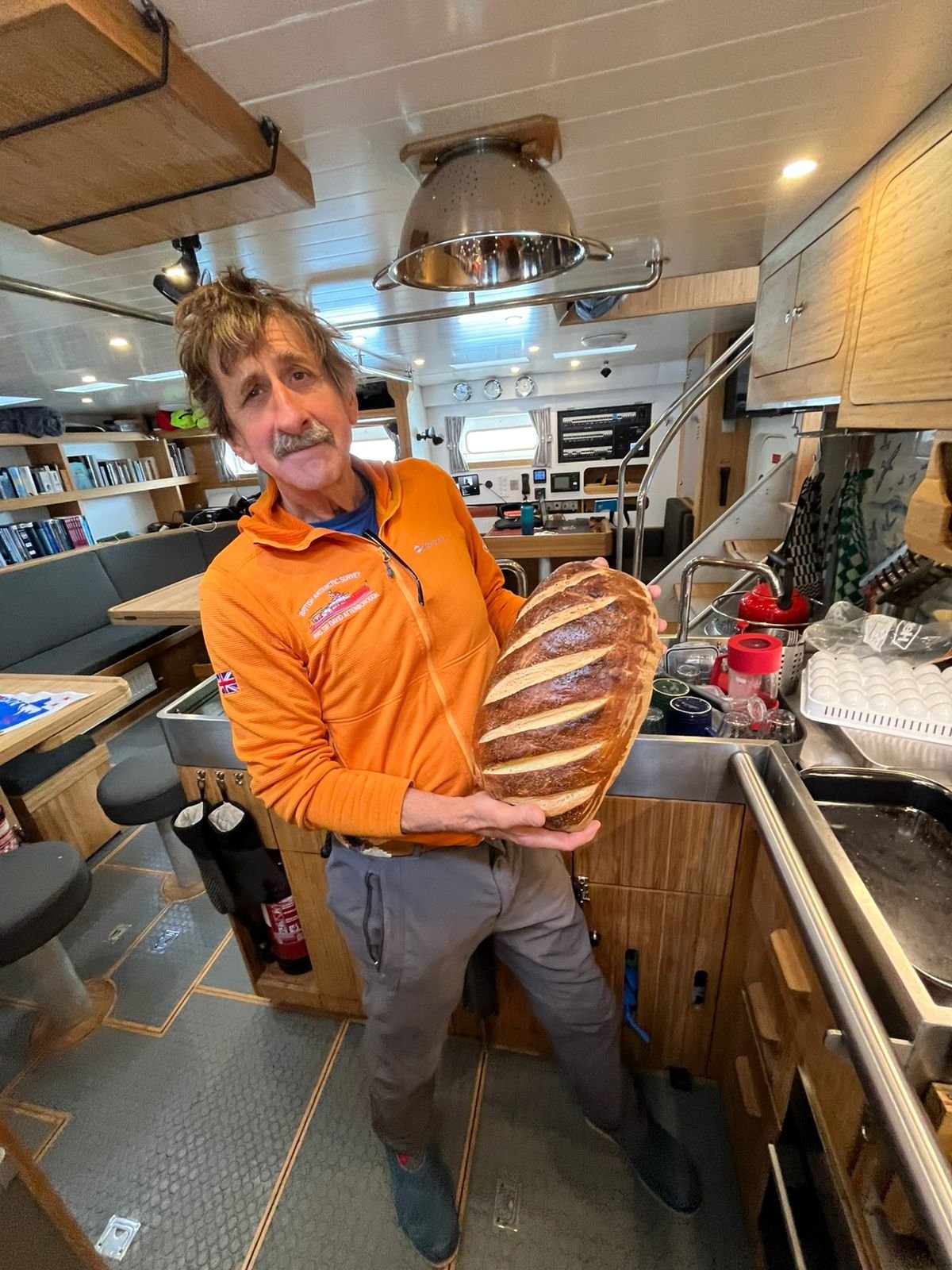
Skip’s daily bread. Photo Credit: Luca Novak.

Homemade alfajores for visitors from Palmer Station. Photo Credit: Kate Schnippering.

Cardamom buns by Matt and Greg. Photo Credit: Kate Schnippering.
The night of March 5th, after a last day of touch-up work is done and the last visitors from Palmer Station have been treated with our ever-increasingly-delicious baked goods (Kate and Greg made dulce de leche Alfajores), our party of 10 takes the dinghy out for a small Champagne toast and group photo to commemorate the hard work – mentally, physically, and logistically. Finally, we are treated to nice weather and a sunset worthy of the voyage. In the morning we head north back to Ushuaia.

The whole team at Site 3. Photo Credit: Tony D’Aoust.

Skip pouring Greg champagne for a toast. Photo Credit: Kate Schnippering.
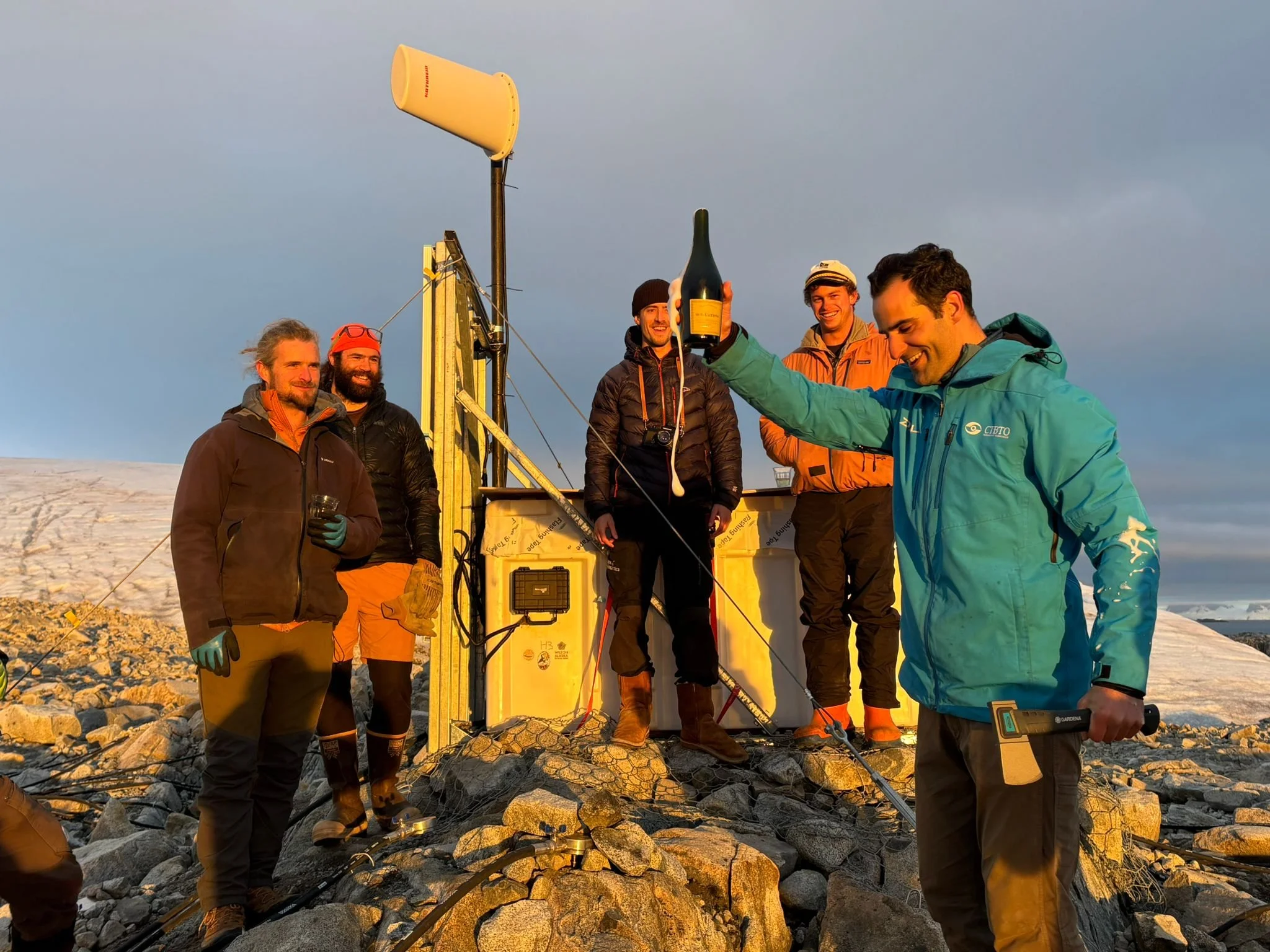
Christening Site 3. Photo Credit: Skip Novak.
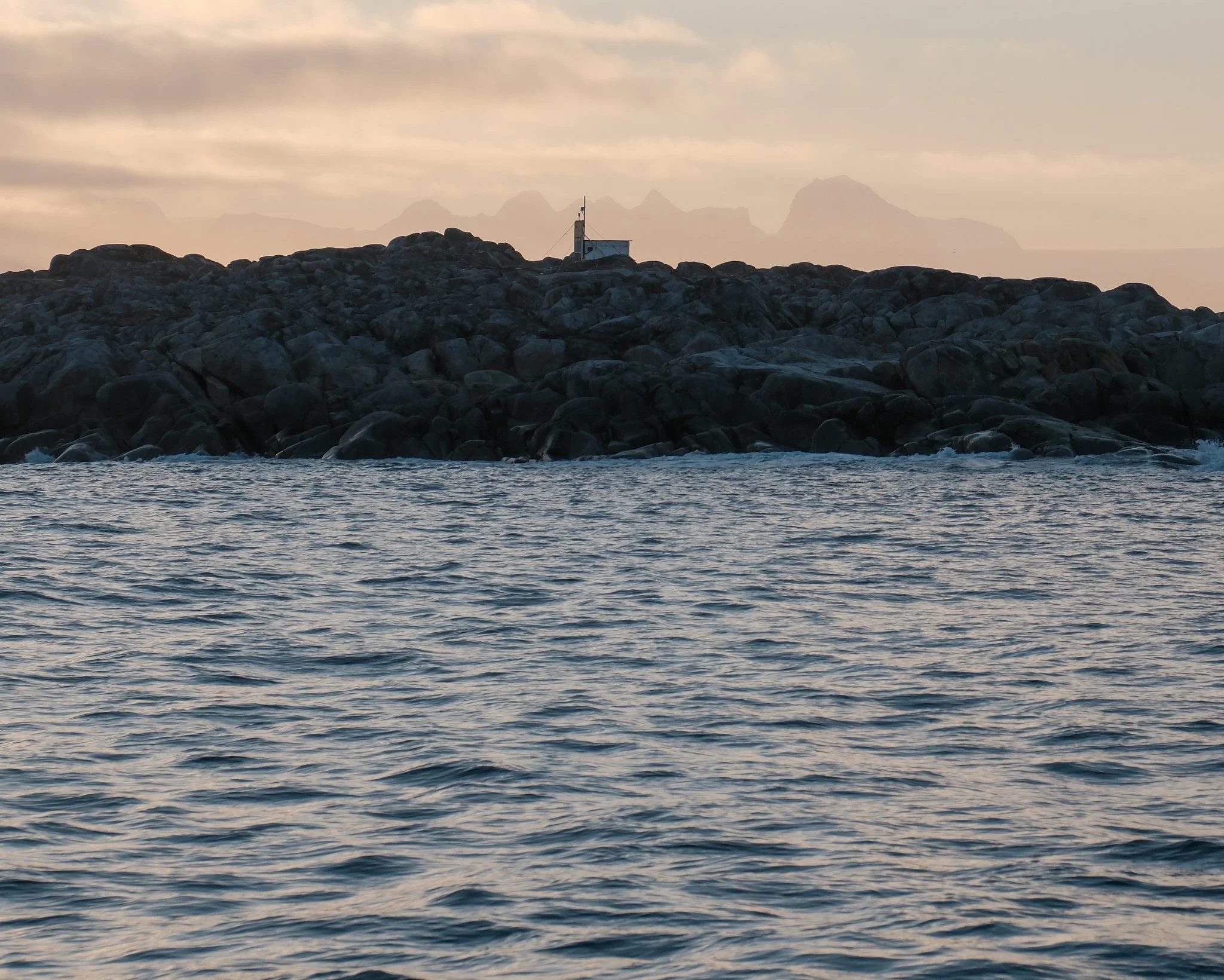
Site 4 receding into the distance. Photo Credit: Kate Schnippering.

Matt VonLintig
Field Technician, 6-time Antarctic veteran
