

Supporting island restoration in The Falklands
Dreams are seeds of change. Nothing ever grows without a seed, and nothing ever changes without a dream.
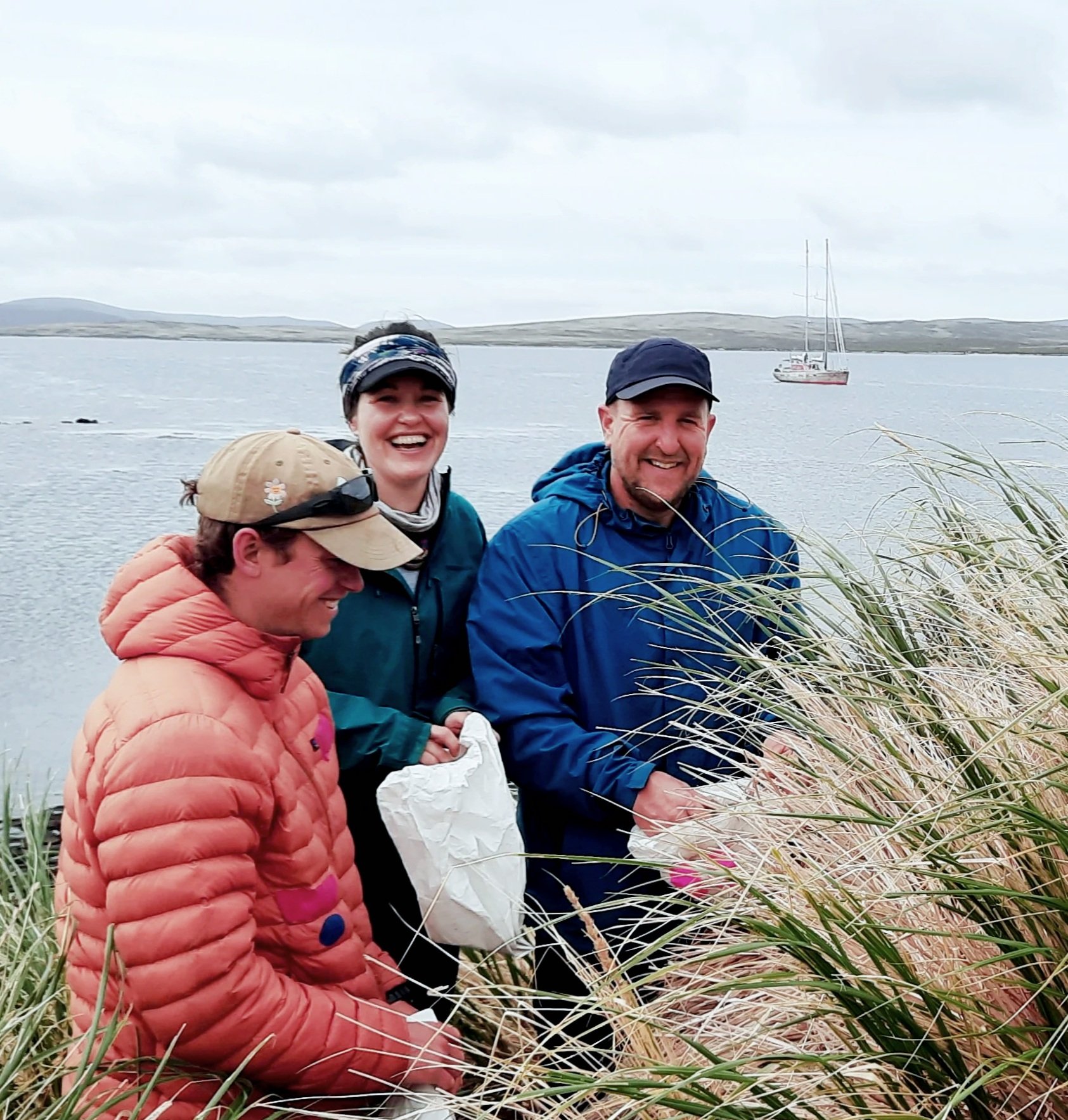
Vinson Of Antarctica Crew- Tor Bovim, Melissa Du Toit and John de Wet collecting Tussac Grass seed ( Poa flabellate).
The last time Vinson visited Dyke Island, Falkland Islands( see the 11/4/22 blog Roots in the Ground)the team learned all about the islands restoration project and how to plant tussac grass.
Since their last visit, we have planted over 200 000 tussac tillers covering 20 hectares of bare eroded soils @falklandrootsintheground .All the planting restoration work occurs in the winter- when cooler, damper conditions allow for the tillers to establish. In summer we keep up the effort by monitoring the plantations for establishment and growth. We are checking for natural seedling success and new plants and animals moving into the sites. The surveying and monitoring gobbles up the short summer and having strong able volunteers is an amazing gift!
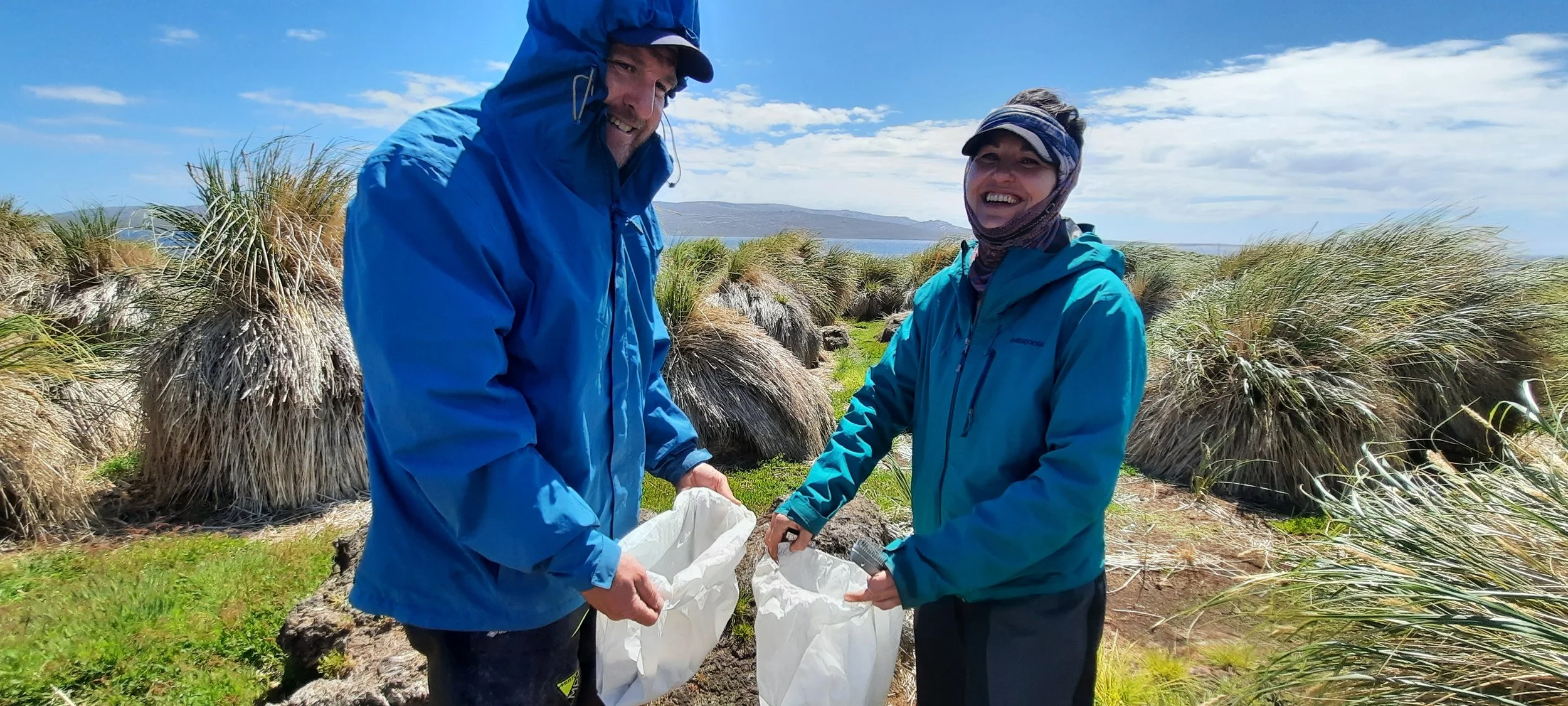
Mel and John showing off their haul of seed.
When we learned that the Vinson had offered us support this summer, we dug out our Jobs Wishlist and planned a hopeful and comprehensive itinerary for their visit. Top of the list was our programme for native seed collection.
We collect seed to help us find a way to increase our capacity to restore the bare soils faster and more cost effectively. Its all trial and error as the conditions at the sites that need remediation are so severe that tender seedlings just don’t stand a chance. So we are trialling seed mixes, delivery methods, seed coatings and establishing a plug nursery. But all these trials need seed....and tussac seed is tiny!
To put it into perspective-5 seed collectors gathered just over 400 grams over 2 hours-not including travel to the sites. As we have lost so much tussac habitat in the Falklands- the sites are scattered and the only way to get to the seed is by boat. Vinson carried us to nearby islands where we could collect from isolated stands and so feed into a more robust and genetically diverse collection.
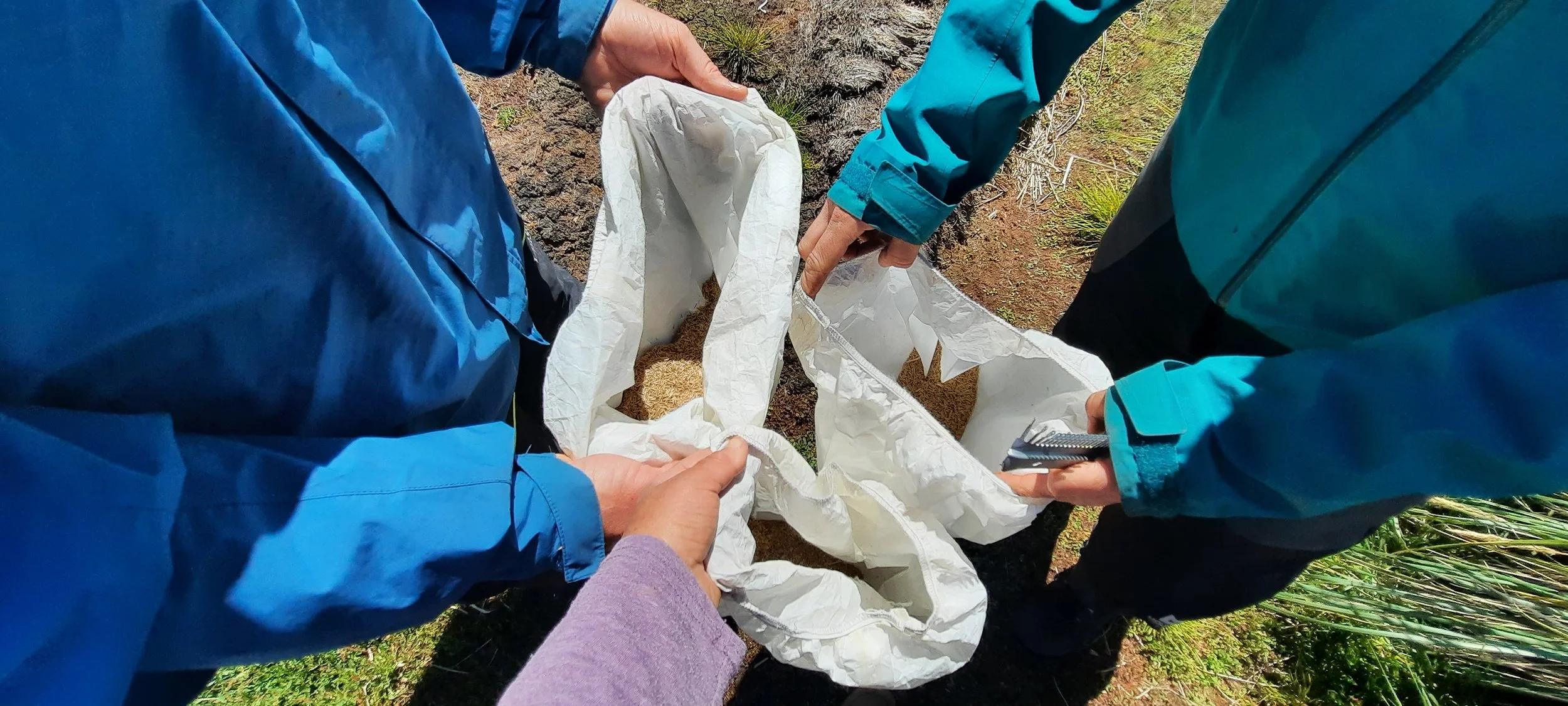
Tussac seed Bonanza.
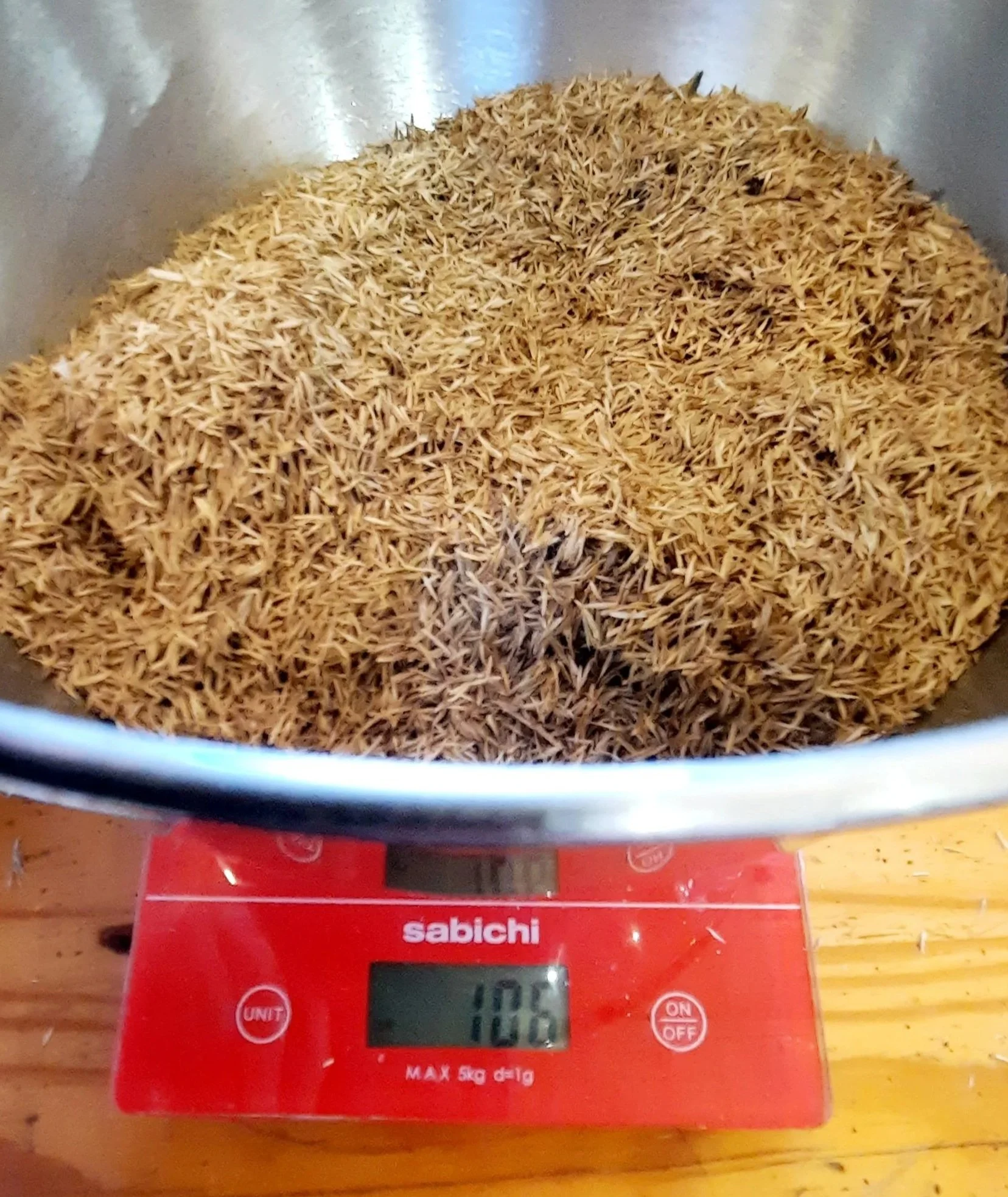
Weighing seed.
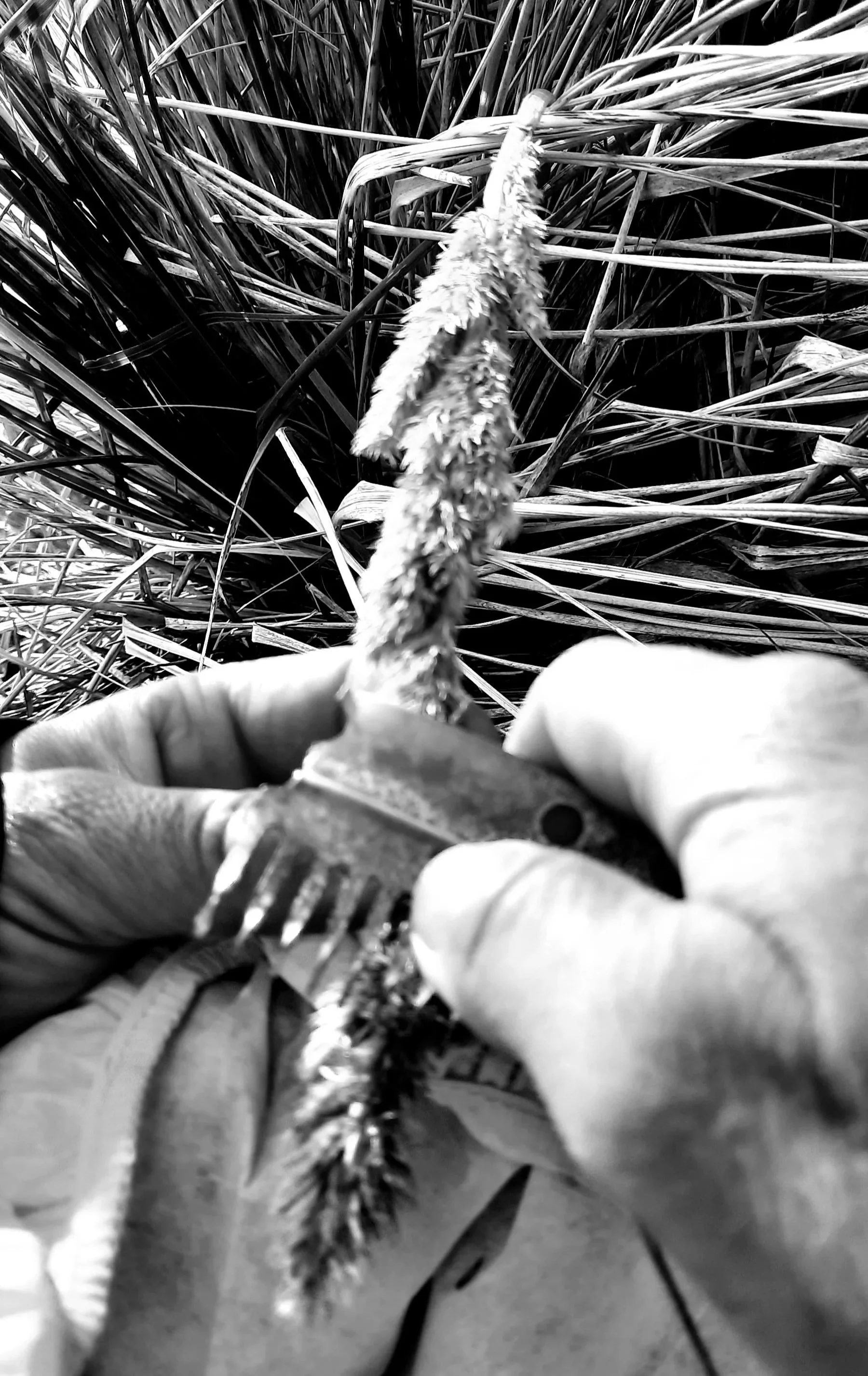
Combing seed off the bushel.
Tussac seed is harvestable in November and December -a short window to get out and about to collect. Other native grasses will ripen over summer and into autumn. Harvesting comes with some basic guiding principles that we follow-such as not harvesting if there are fewer than 50 individual specimens. Checking the seed viability first. Tread softly -don’t take the first, don’t take the last , don’t take more than you need. (leave enough for everyone ie birds and insects and natural regeneration). Around 10 percent of the plants overall yield is a good average. Once harvested the seed comes back to base- checked for pests, weighed, cleaned and stored for use or propagated straight away.
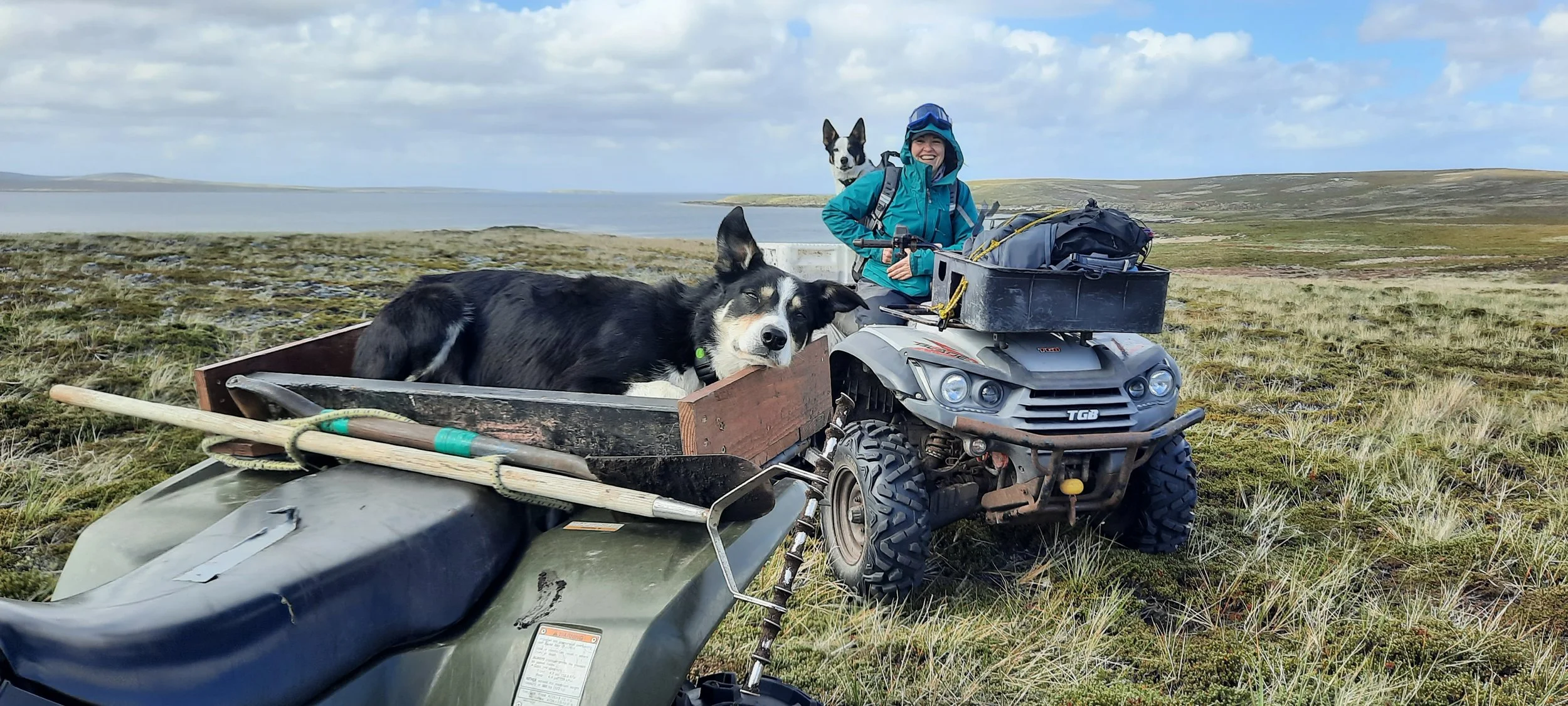
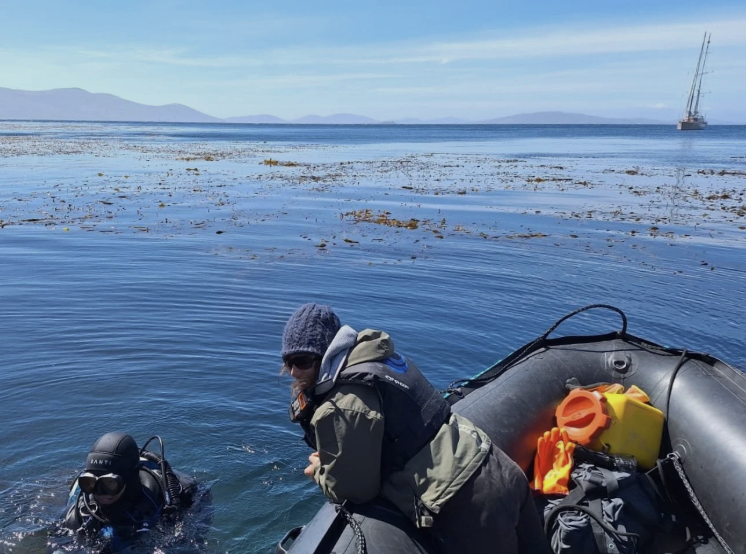
Reaching seed is no quick task! The team took quads , boats (through thick kelp) and by foot to harvest.
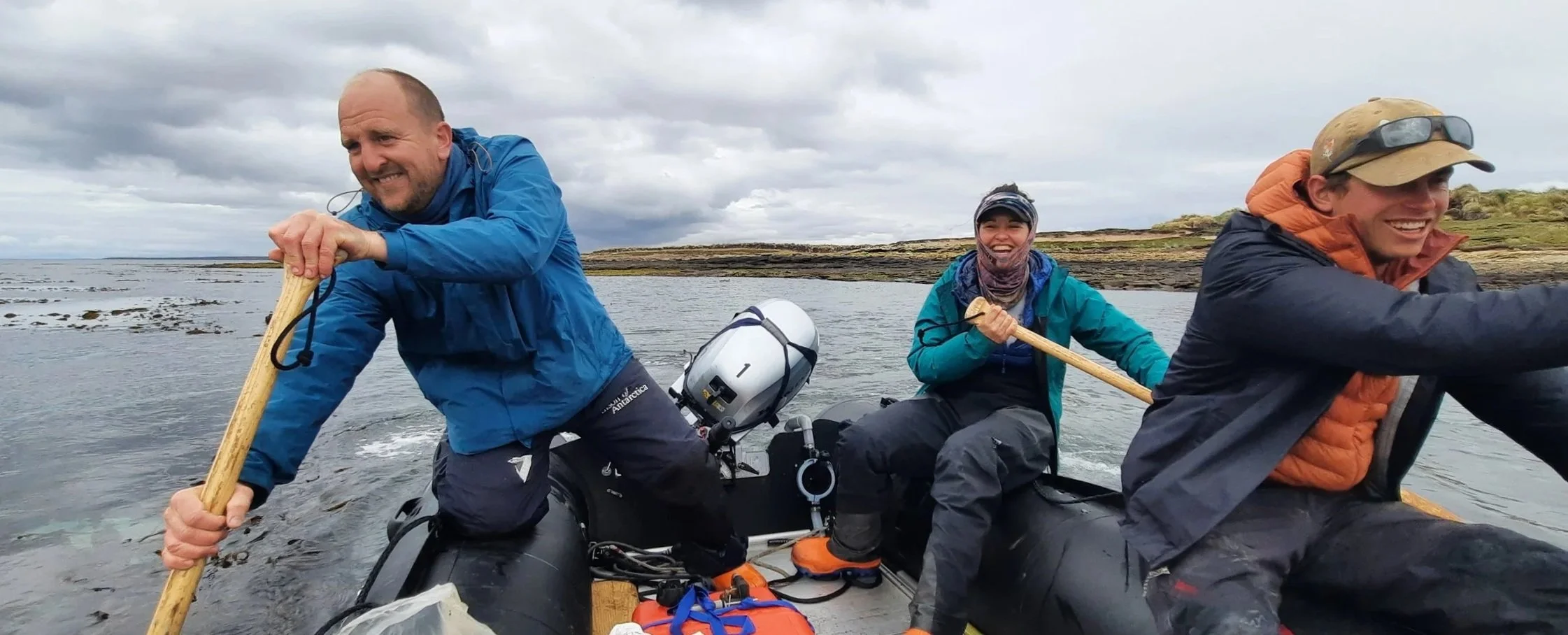
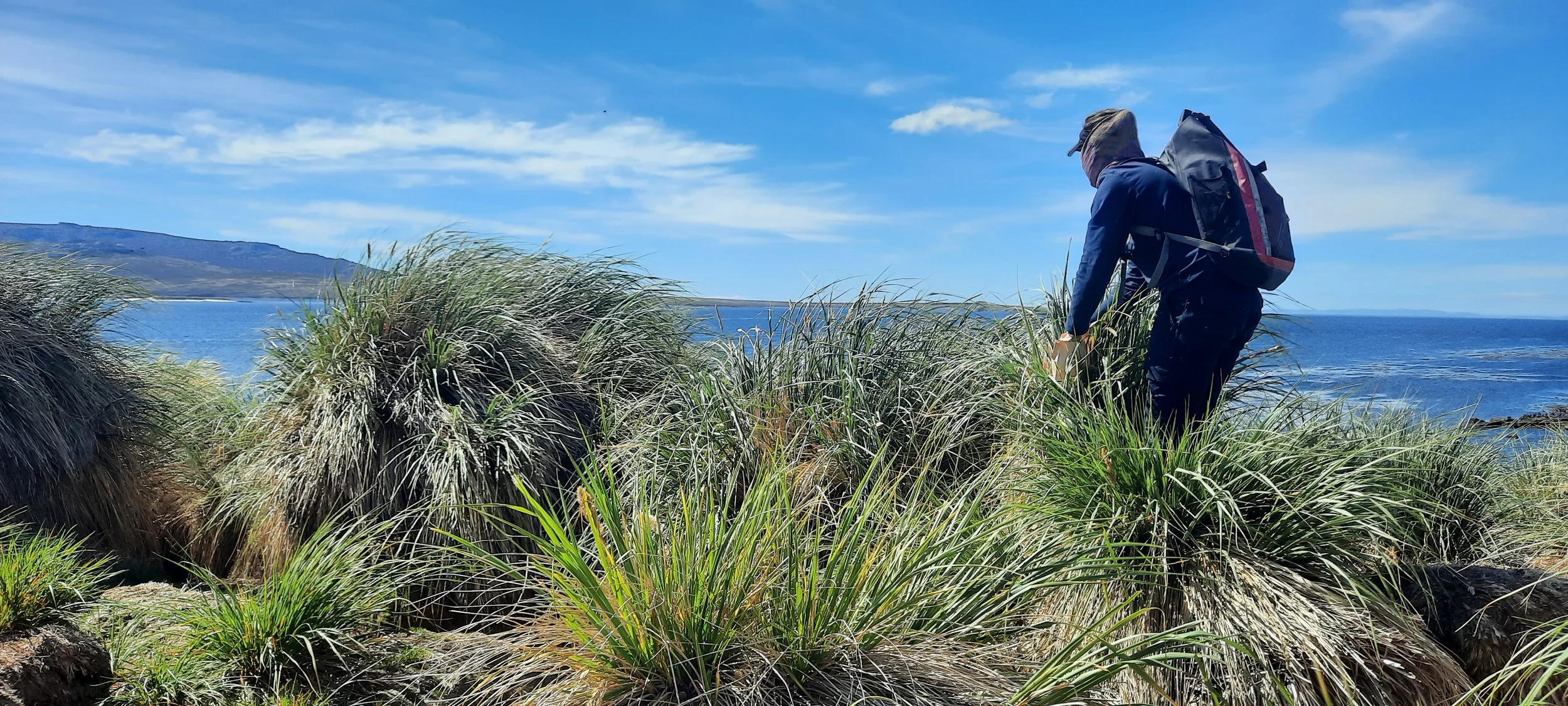
The weather was lovely, the seed was lush this year, the team were enthusiastic and hardworking and it couldn’t have happened without the Vinson’s support! Building capacity through restoration and engagement is as critical as sowing the seeds!
Giselle Hazell
Nature guide
