

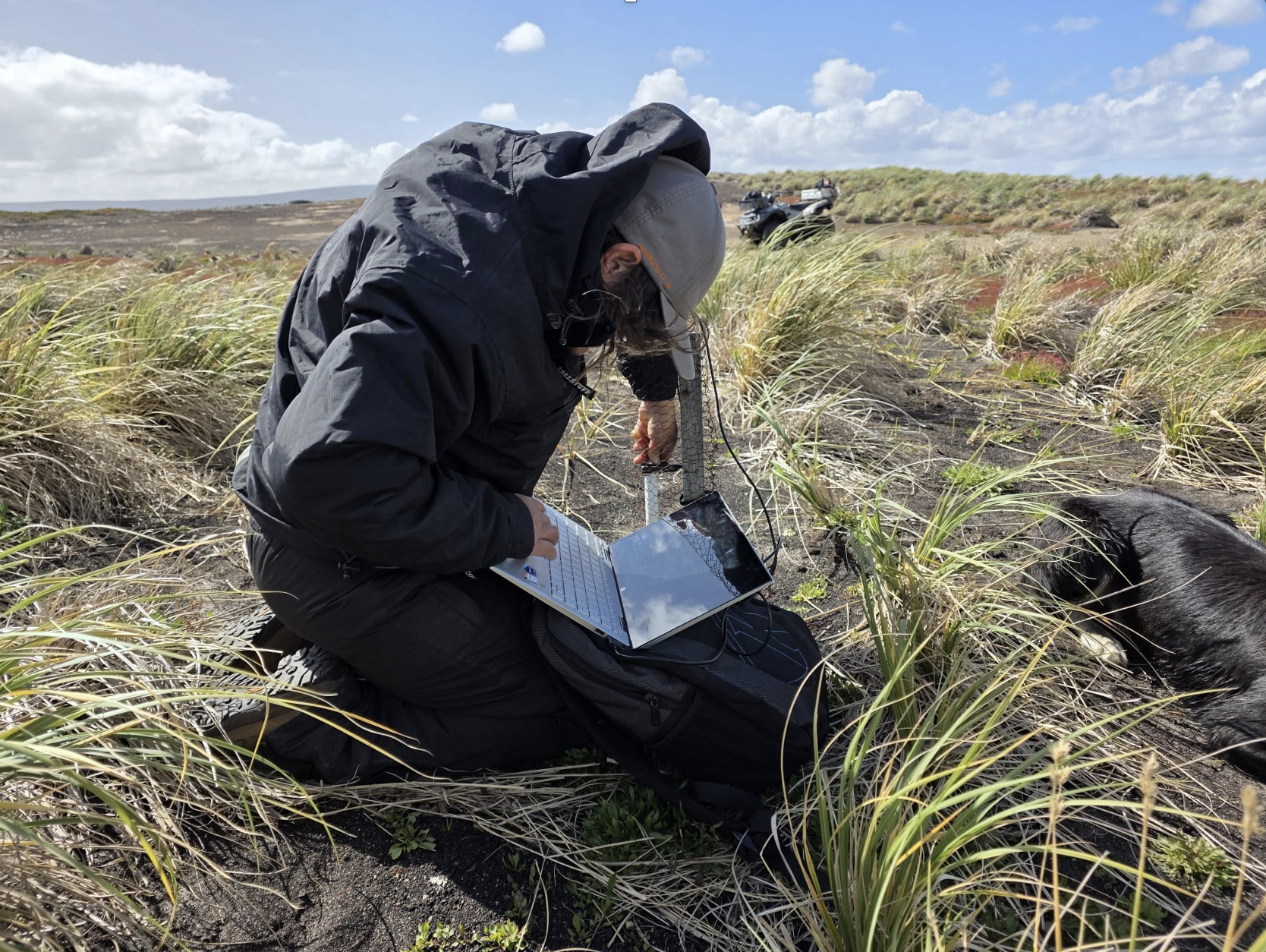
Downloading the data loggers. Photo Mel du Toit
Part of our summer monitoring programme on Dyke Island is getting to our soil data loggers and downloading the years records. The soil loggers are sited in old growth tussac stands, bare eroded ground and newly planted ground. They will remain in situ for up to ten years ( the expected battery life)and they should give a good picture of how the restoration effort is progressing. The mature tussac stand gives a baseline for what healthy tussac soil looks like – how it holds moisture and how it regulates temperature. We expect to see the planted ground slowly become more saturated and cooler and able to withstand extremes and shocks. The overarching objective of the programme is to kickstart the hydrological and carbon cycles- restoring life and resilience into our soils.
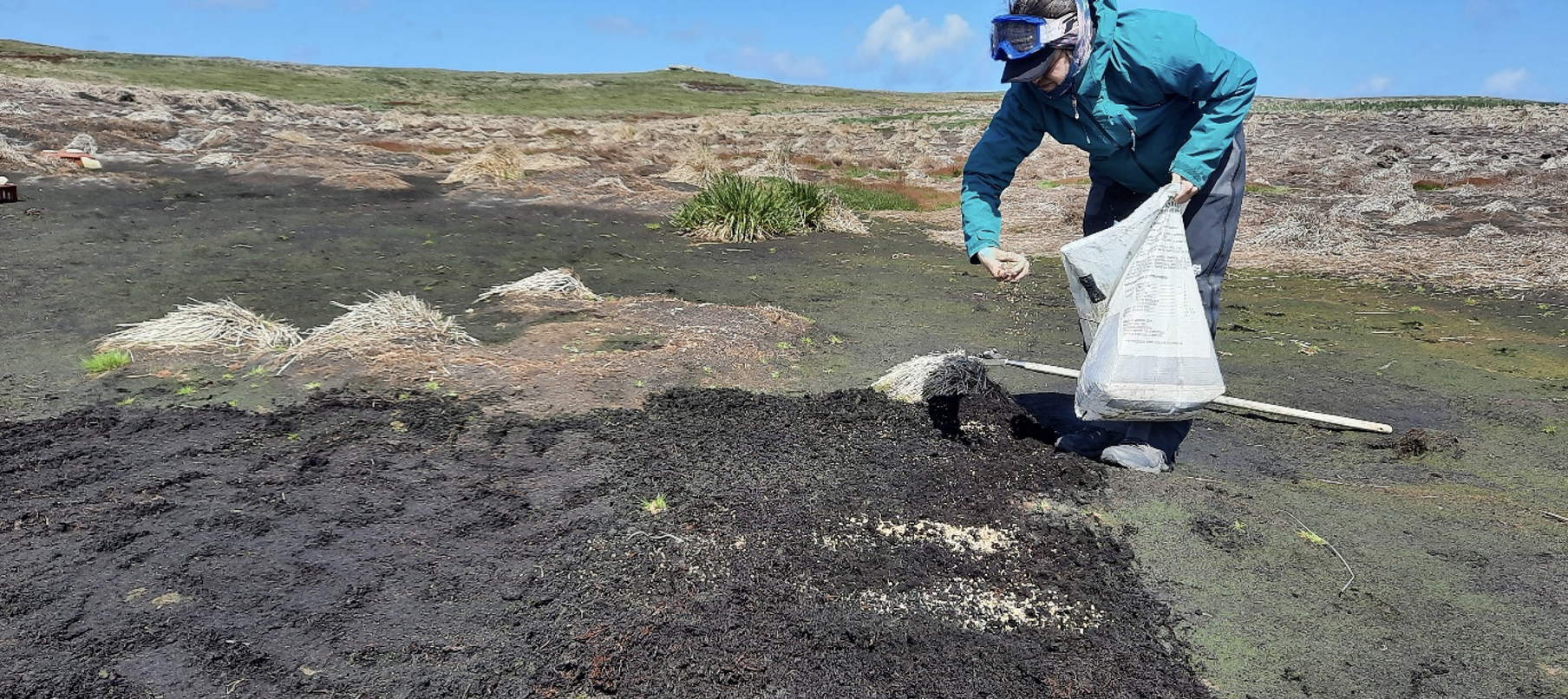
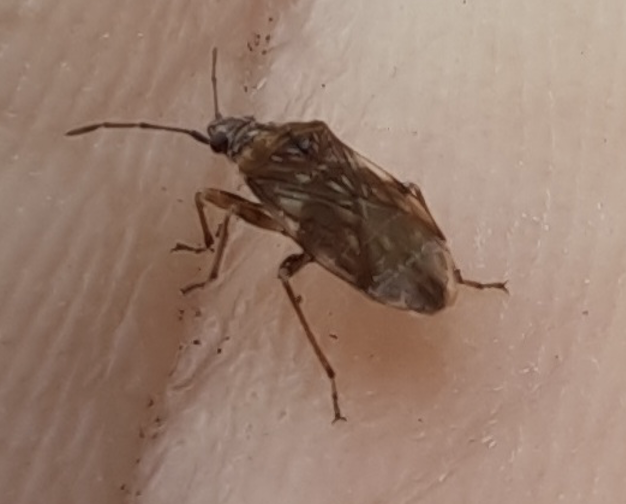
John de Wet getting a close-up view of native wildlife:
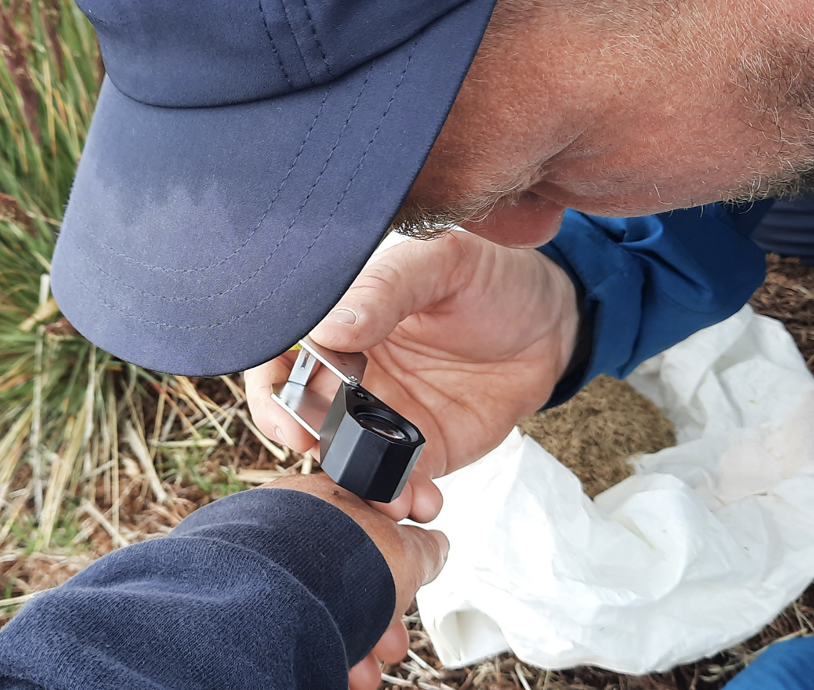
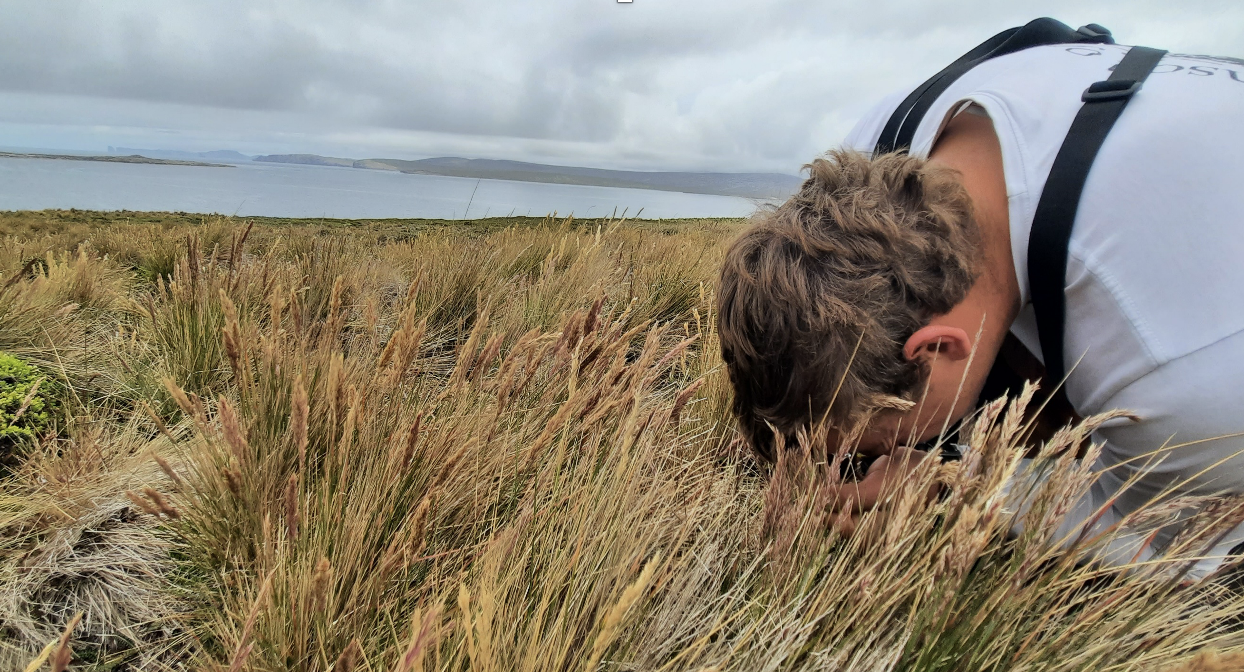
Tor Bovim uses a hand lens to explore the microscopic world of grass inflorescence.
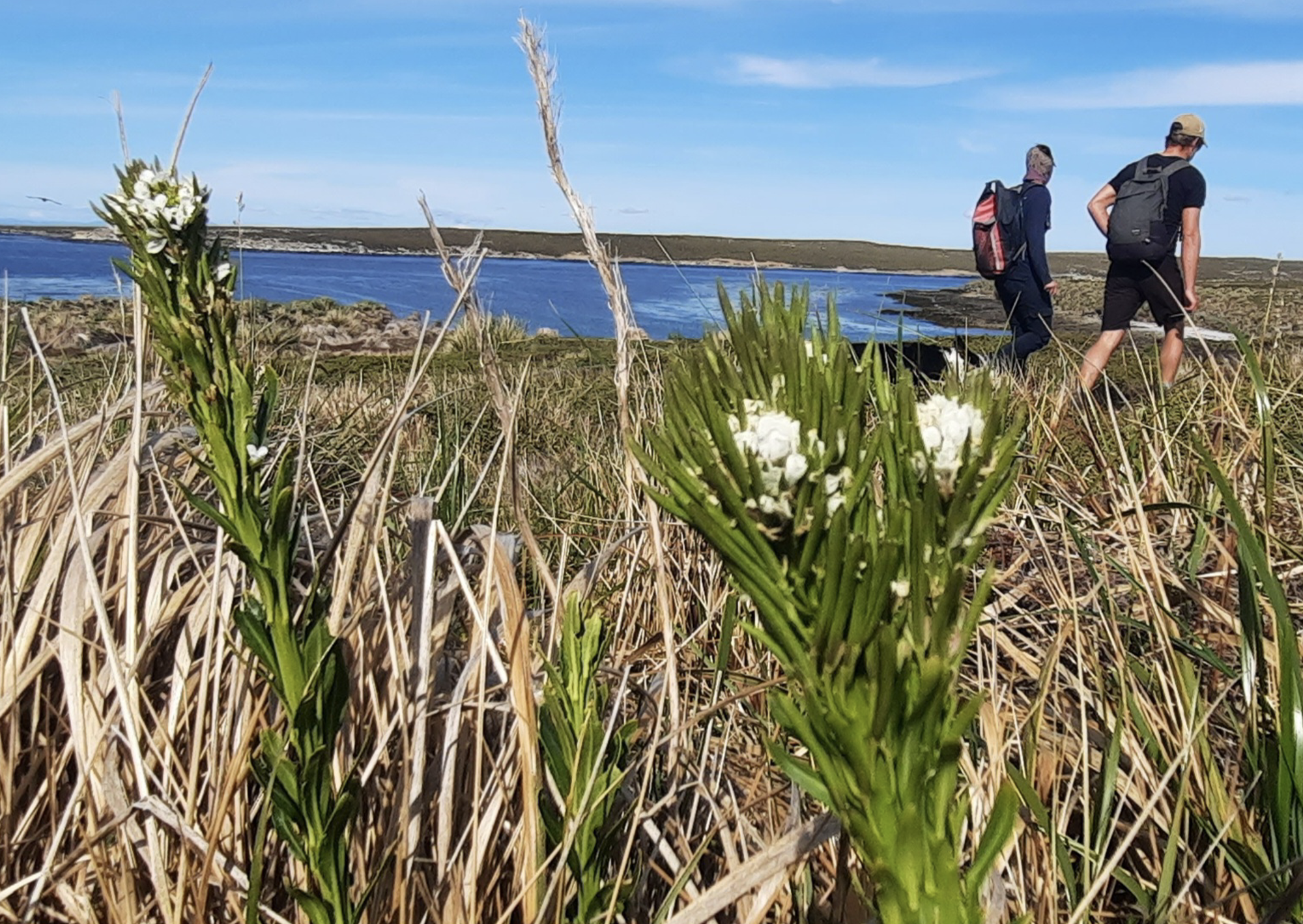
Dyke Island is home to the endemic and endangered Falkland Rock Cress (Left) and is an A.C.A.P Breeding site. Much of the summer involves the long-term monitoring of these populations. Island wide coastal bird surveys, and monitoring of key species such as Striated Caracca, Falkland Skuas, Magellanic Penguins, Southern Giant Petrels and our large 400 breeding pairs of kelp gulls.
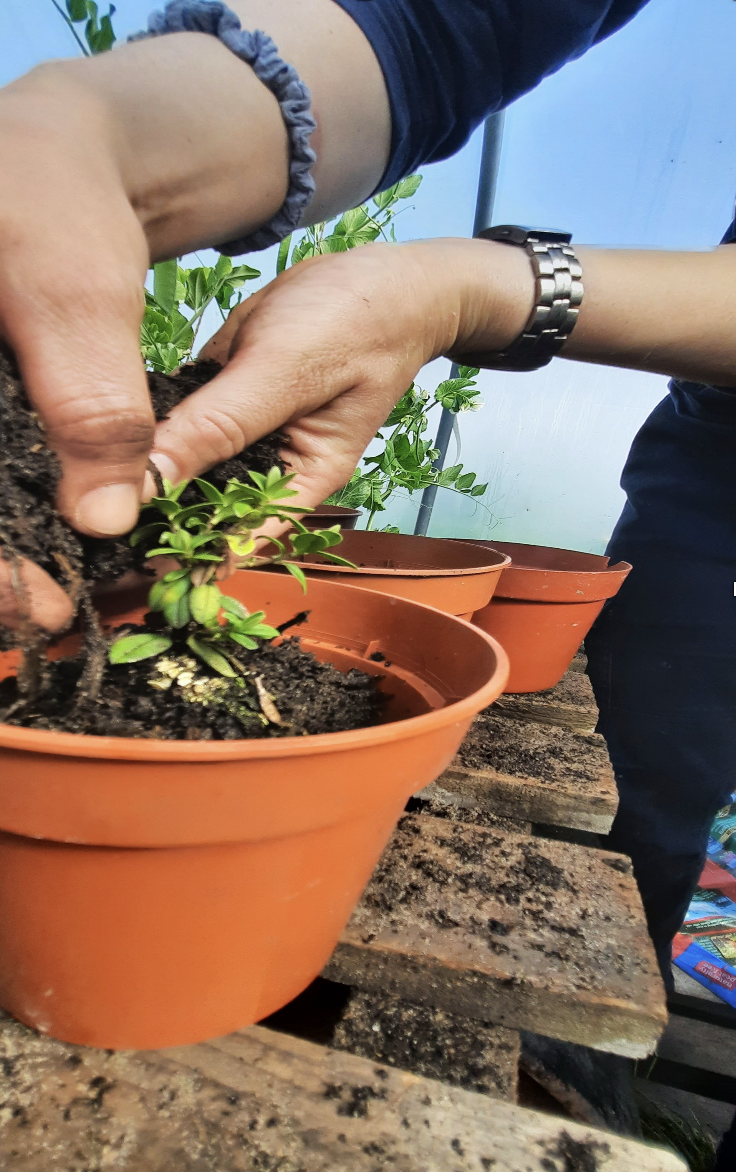
In our fledgling nursery, Boxwood cuttings from autumn are well rooted and are being planted up into larger pots for hardening off and bulking up before they go out to the plantations. These slow growing shrubs are an important food source for our endemic hover flies and nesting sites for birds:

The only way to reach Dyke Island is by boat and there are no facilities to land heavy machinery or bulky materials- so when we have such hardy and fit sailors on hand, we make the most of the opportunity to make inroads to the islands infrastructure. The Vinson crew downed seed sacks and swopped them for shovels and cement mixers. Spending a day digging out foundations, collecting rock off the beach and laying a cement slab for extensions to the base
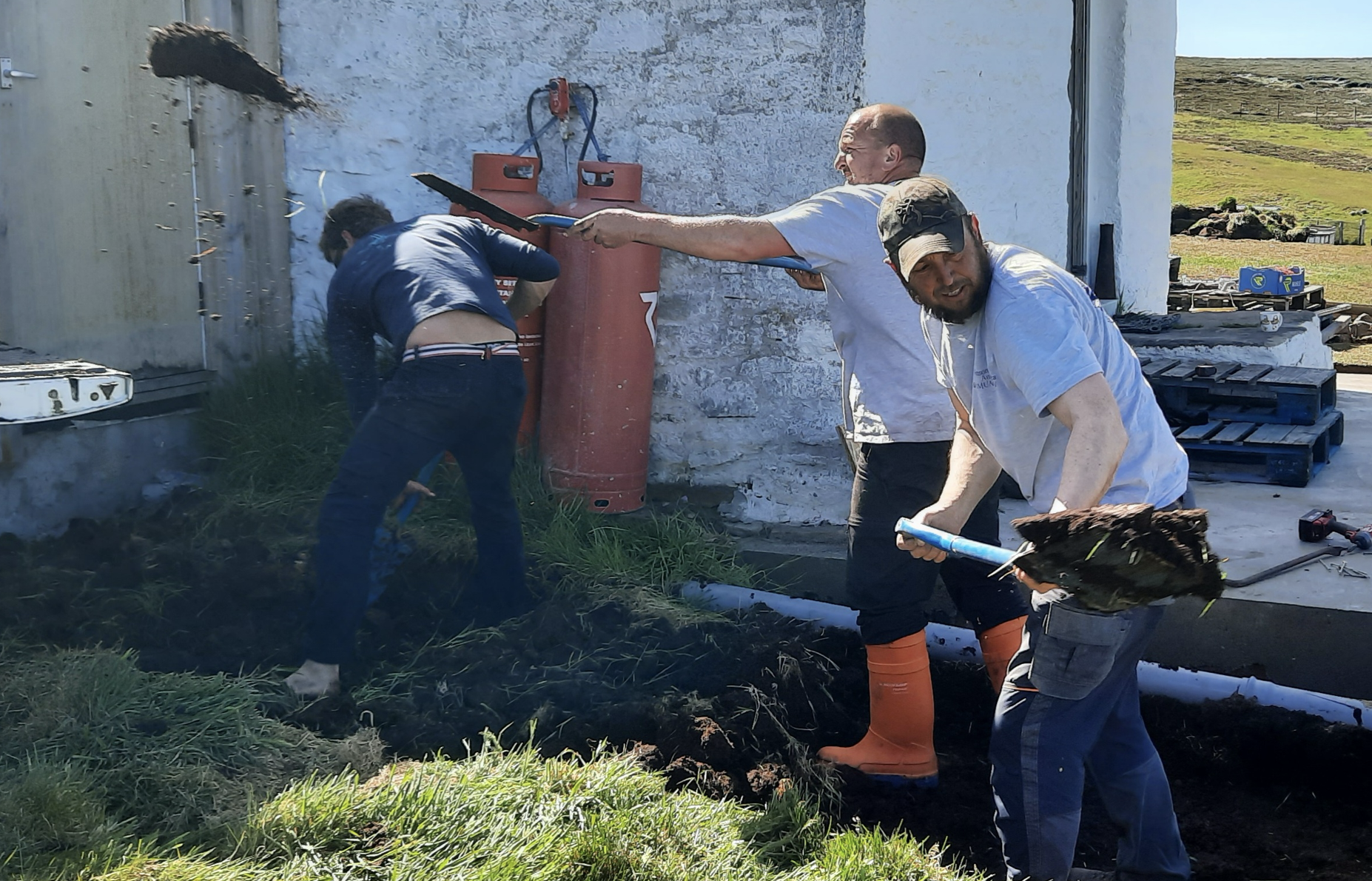
Tor, John and Alec bailing out to bedrock.
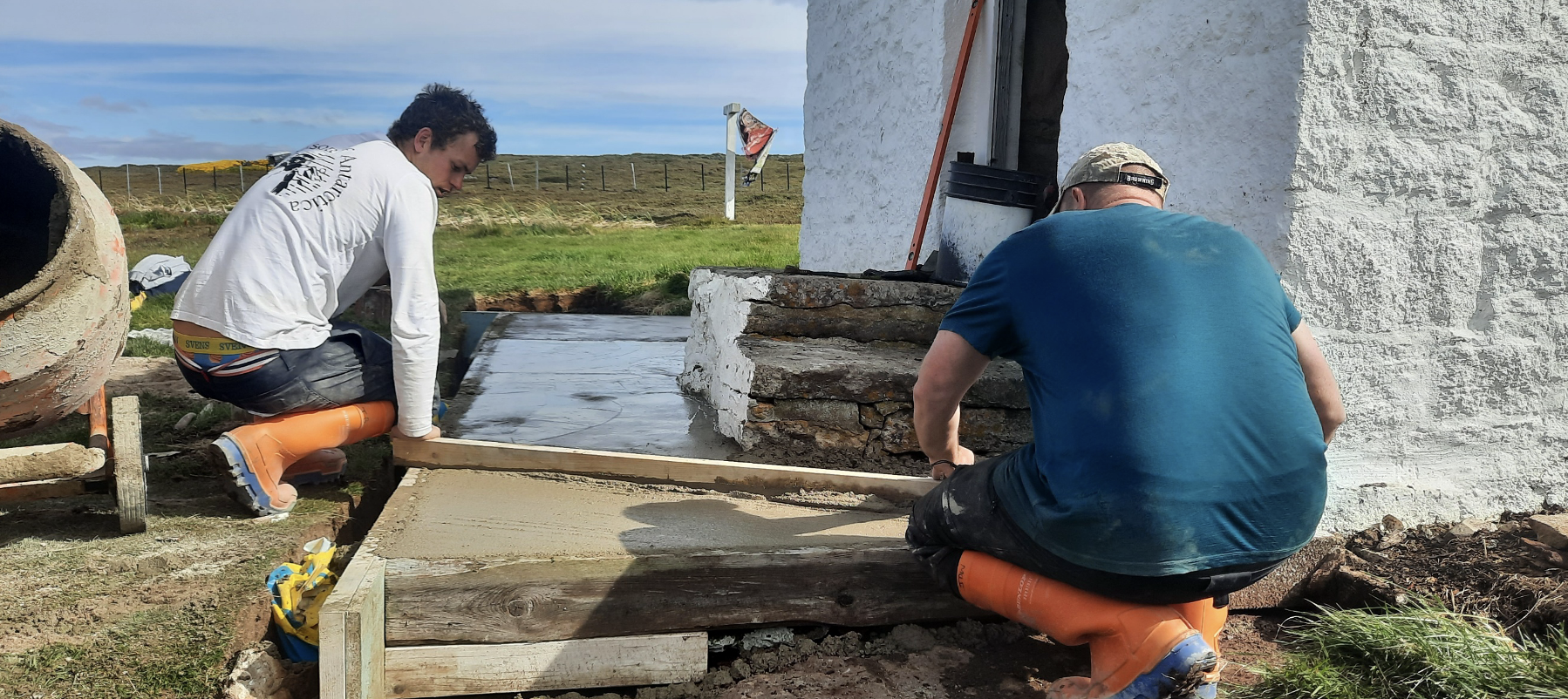
Tor and John levelling the slab.
Come winter when we start planting tussac again- having a closed porch to stop all the mud getting walked into the communal kitchen is going to be a real luxury for the planters!
And just in case you thought the Vinson team were slacking off ,we squeezed in a beach clean adjacent to the tussac belt. Effective restoration is a whole systems approach
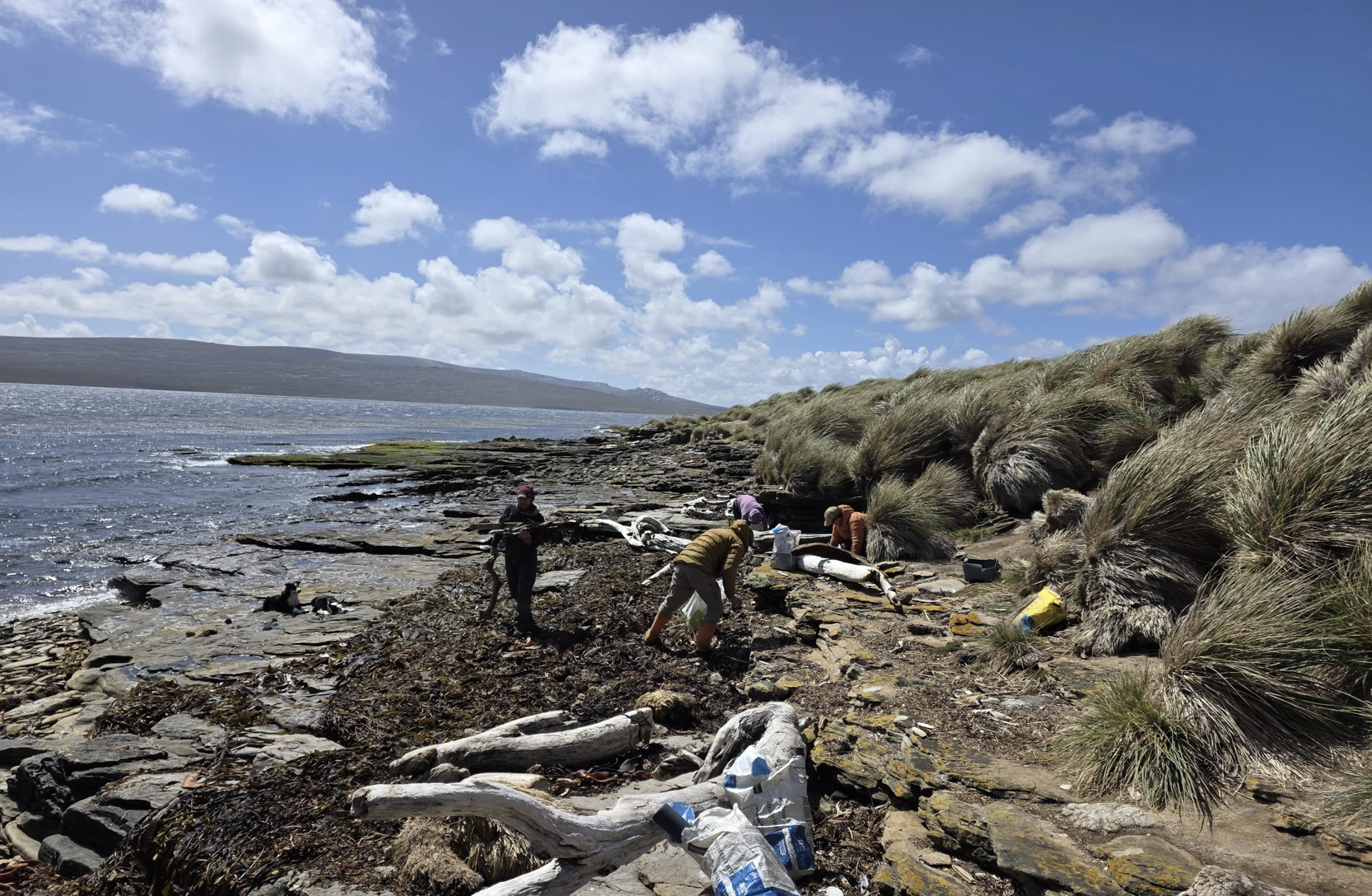
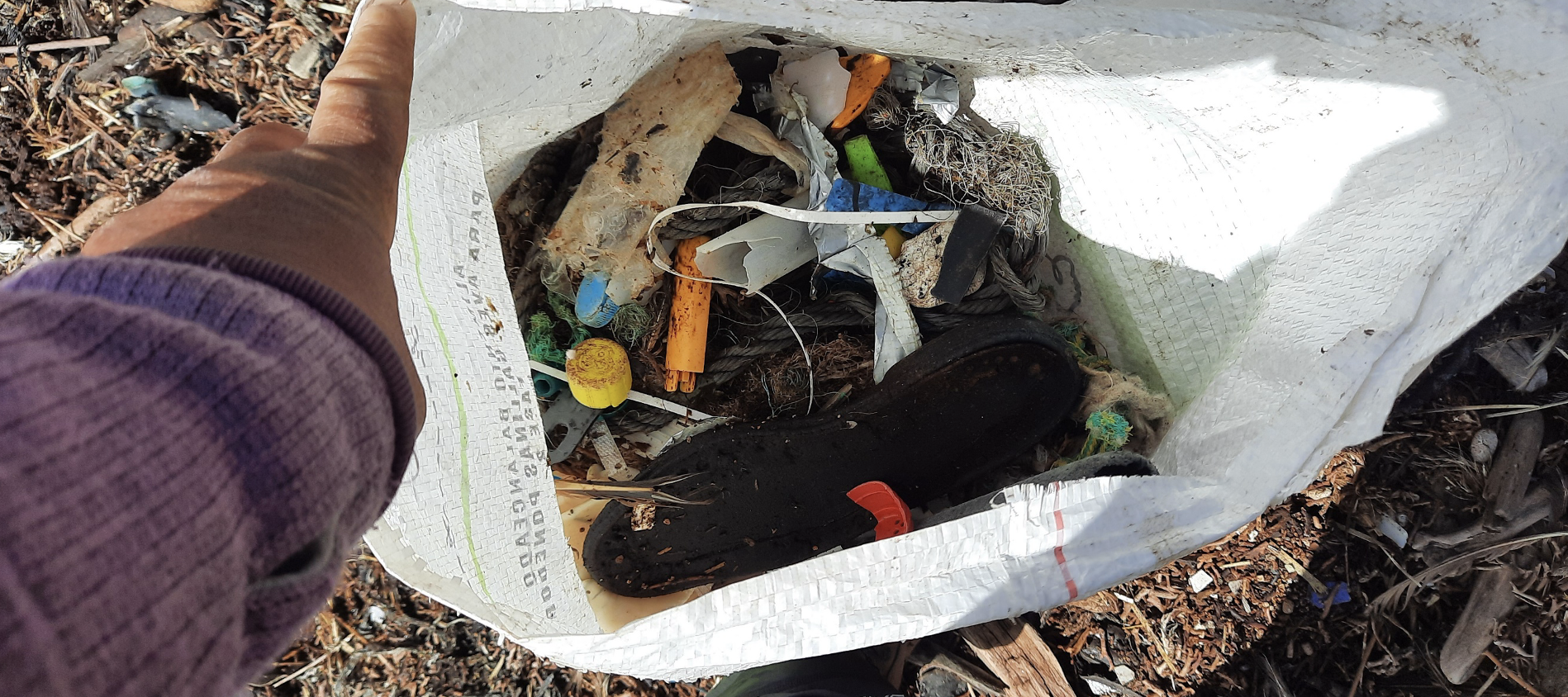
When we envision whole systems , kickstarting cycles and restoring ecosystem services -we also dream of the community that supports this legacy. How our islands can support families, and support visitors that can engage with our lifestyle. Sharing in the beauty of our rich wildlife and beautiful waters.
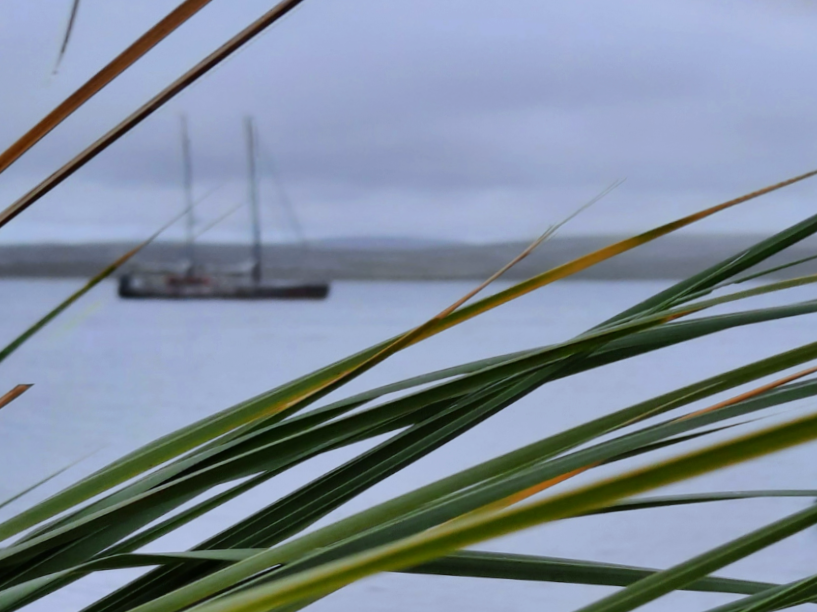
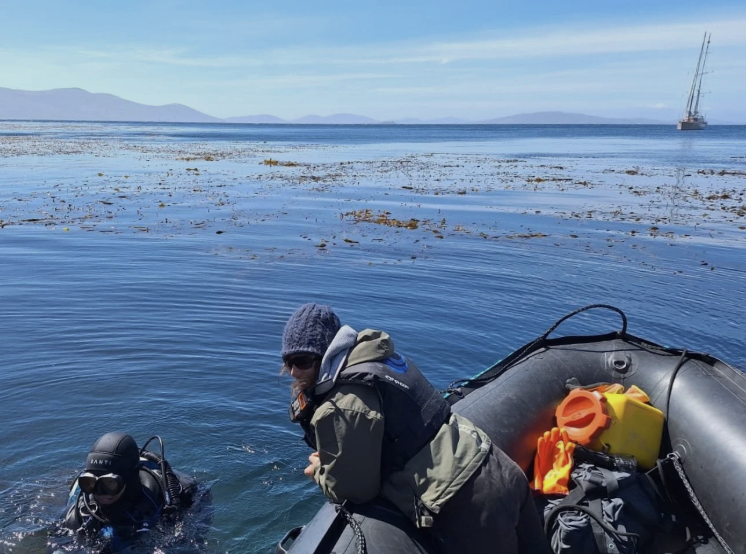
Vinson at anchor in Dyke Island.
Where we can share in the richness of human experience, labour shares, share in hope for the future and the reciprocity and joy of shared friendships. Pelagic Expeditions have been a good friend to the Falklands – following a long maritime tradition of visiting vessels. We couldn’t have press ganged a better crew into our restoration work this summer. Much gratitude to the good ship Vinson and our new found friends.
Giselle Hazell
Nature guide
