

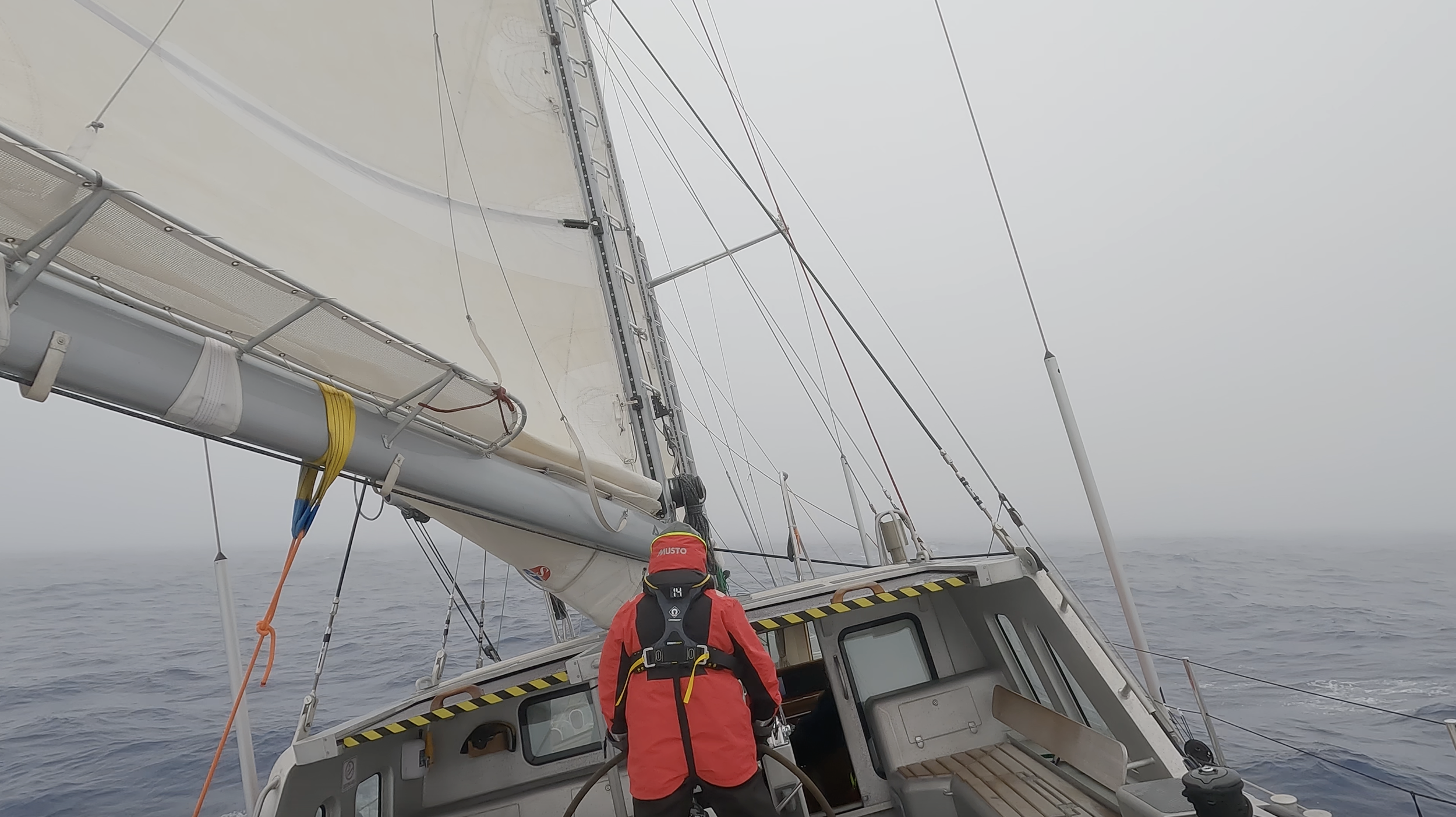
The misty passage. Credit Lucas Krupp
We motorsailed from Ushuaia at 2.30 pm on January 2nd, passing the famous red lighthouse, which is the end point for most tourist cruises after an hour. We were split into three, three hour watches, which gives a very generous amount of time for sleep. Our first watch took us to midnight and the ending of the Beagle Channel. Relations between Chile and Argentina are never good and were made worst by the Falklands War, so we had to swing wide to the East with no chance of sighting Cape Horn, which is Chilean.

Edward and Lucas Camel Racing. Photo Credit Viola Iselin

Mike watching Ushuaia fade into the distance. Photo Credit Lucas Krupp

Manuel easing the preventer. Photo Credit Lucas Krupp

Judith at the helm. Photo Credit Viola Iselin
Back on watch at 6am we were under sail power so I took the helm for 2 hour-long stints as we passed the latitude of Cape Horn. There was a strongish wind on the beam and quite big lumpy waves which caught us amidships and made us roll. It made me think how relatively rarely I’d had to cope with such conditions on the Clipper Race. It was bitterly cold, so my hands were feeling it when I returned to the warmth of the pilot house.
My next few watches were steady going before the fog descended for my sixth watch, with easier seas, and it felt a bit like the misty passage in The Rime of the Ancient Mariner!
“The ship drove fast, loud roared the blast, And southward aye we fled.
And now there came both mist and snow,
And it grew wondrous cold:
And ice, mast-high, came floating by, As green as emerald.
At length did cross an Albatross,
Through the fog it came;
As if it had been a Christian soul, We hailed it in God’s name.
It ate the food it ne’er had eat,
And round and round it flew.
The ice did split with a thunder-fit;
The helmsman steered us through!”
In the early hours of 5th January in my bunk I could feel the wind and seas getting up and felt some of the trepidation I’d felt in the North Pacific: ‘Reluctant watch prepares to face the wind and rain…’, but this time I thought ‘This is exactly what I’ve come for!’ Wrapped up as tightly as I could, with rubbery fisherman’s gloves, I took the helm. It was great. Force 6 and occasionally gusting 7, I reckoned, with some waves coming slightly to the stern. I focussed entirely on the bend of the chrome guardrail at the pulpit, bearing away as it dipped below the horizon and started to skim to starboard against the texture of the waves. As it rose back up I released the pressure, heading upwind if needed and glancing quickly down to check the magnetic compass.
Amundsen is really designed to sail on autopilot, so the helming position is unusual: it is very high, to see over the pilothouse; there is no platform to keep you upright as the boat heels and with two masts in front of you, you have little sight of the sails and no chance of spotting a luff! Strangely too, the top of the wheel is about level with my pelvic bone, so to bear away I just rocked forward onto my toes, and pushed some weight onto the downwind side of the wheel. No strain across the shoulders at all!
I managed three stints at the helm in that watch, the last only for about 20 minutes as the cold got to me. Reading about Tom Crean’s three expeditions to Antarctica, I am in absolute awe at the conditions they lived through, the suffering, privations and courage!
My watch leader Kate Schnippering, said that the boat felt much more comfortable when I was helming and one of the crew/clients said she could tell I was helming because she slept better!
Unexpected compliments, but maybe an indication that a human helm can anticipate the impact of a wave or a gust while an autopilot can only be reactive. I felt appreciated at least!

Southern Fulmar. Photo Credit Lucas Krupp
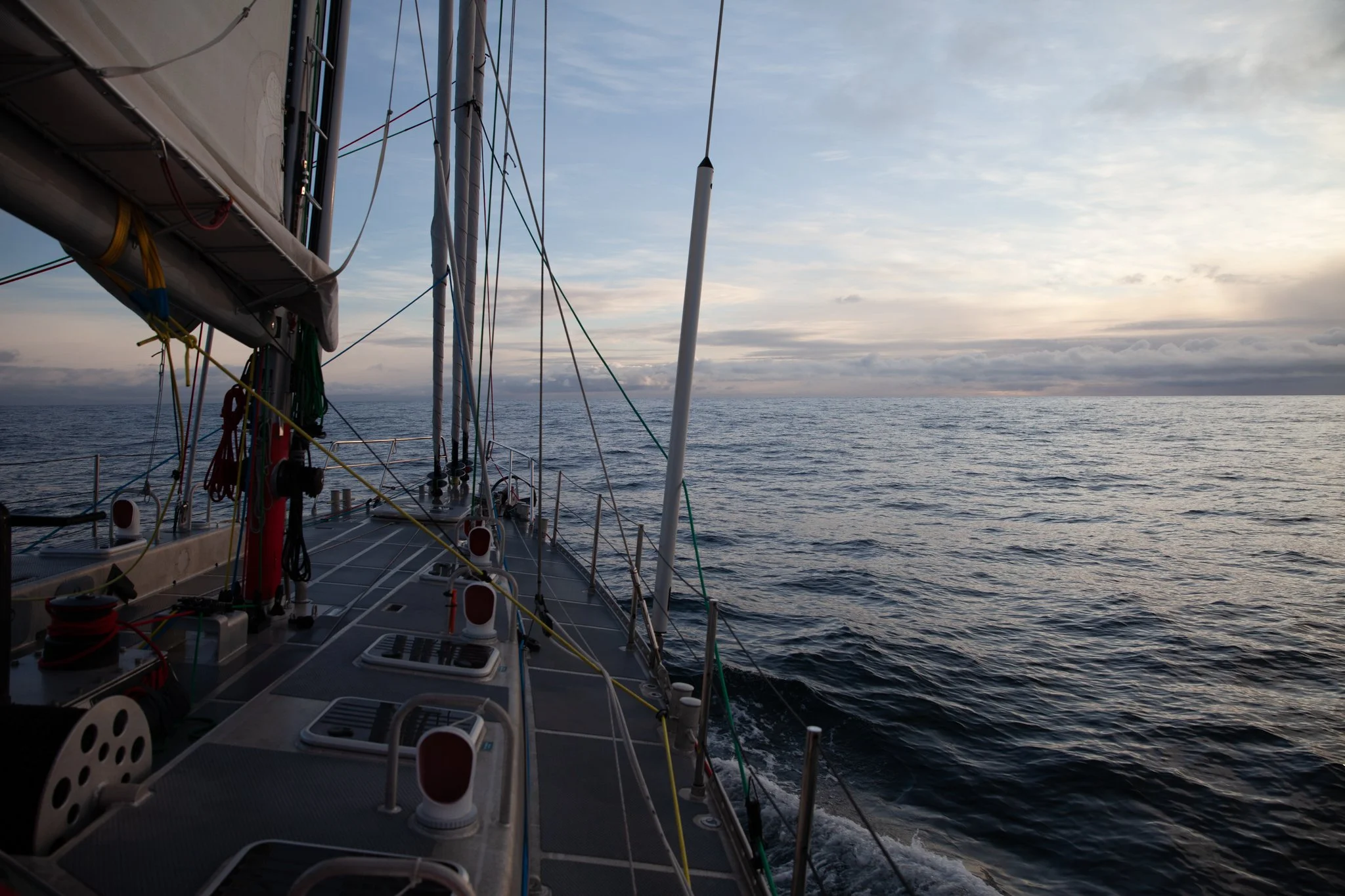
Nearing Antarctica. Photo Credit Viola Iselin
The wind switched to the east later in the day, while the swell still came from the west, but we gybed the sails and that night made distant landfall - my first glimpse of Antarctica. As if to welcome us we spotted some penguins swimming like endearing mini dolphins, soon followed by our first sightings of whales - Humpbacks and Orcas both.

First Humpbacks. Photo Credit Manuel Lugli
As we passed the South Shetlands, which lie on the equivalent latitude to our Shetlands, the wind eased further and the surprisingly long motor-assisted passage to Trinity Island started — so it was when I woke from 6 hours offwatch that I climbed on deck to be dazzled by the mountains of snow and rock that surrounded us. Way beyond my expectations!
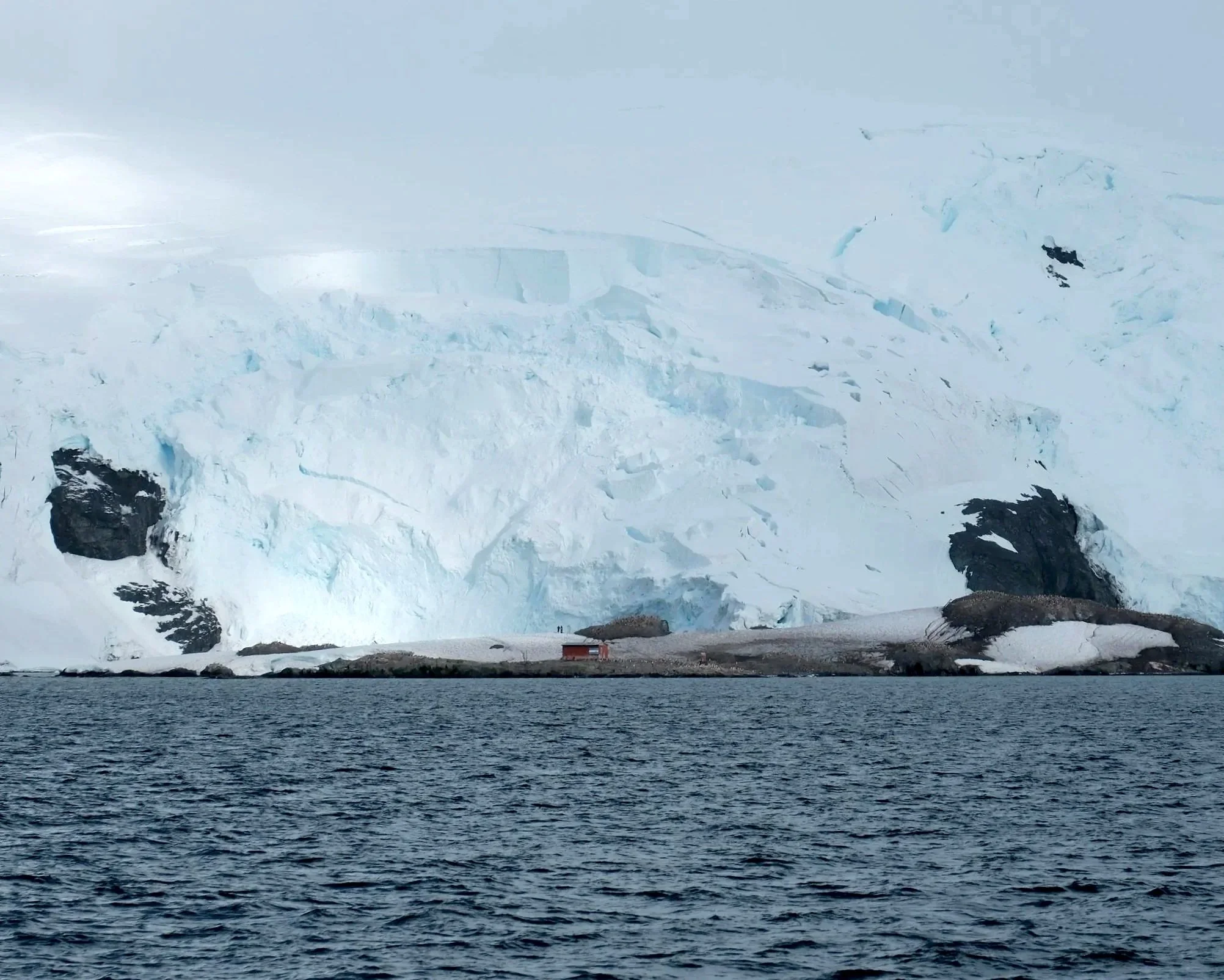
Crew ashore performing HPAI assessment, Photo Credit Kate Schnippering
After breakfast we were ferried ashore to the Gentoo penguin colony on D’Hainaut Island, a small island in the bay, where almost immediately I was able to fulfill the request of my youngest grandson, Charlie, to ‘bring back a photograph of a baby penguin!’ They were gorgeous!

Gentoo with a hungry chick. Photo Credit Manuel Lugli
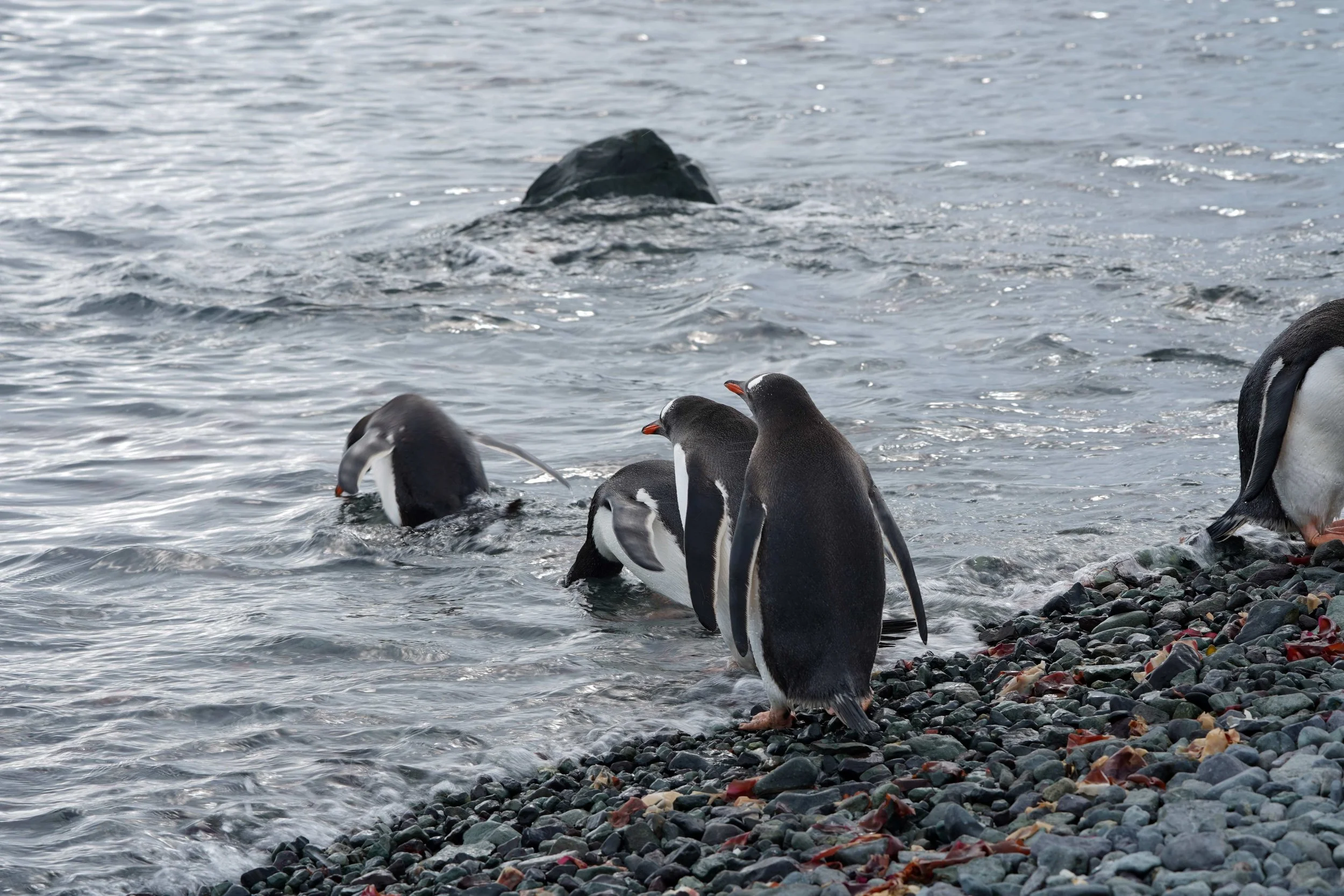
Gentoo Penguins going to sea. Photo Credit Manuel Lugli
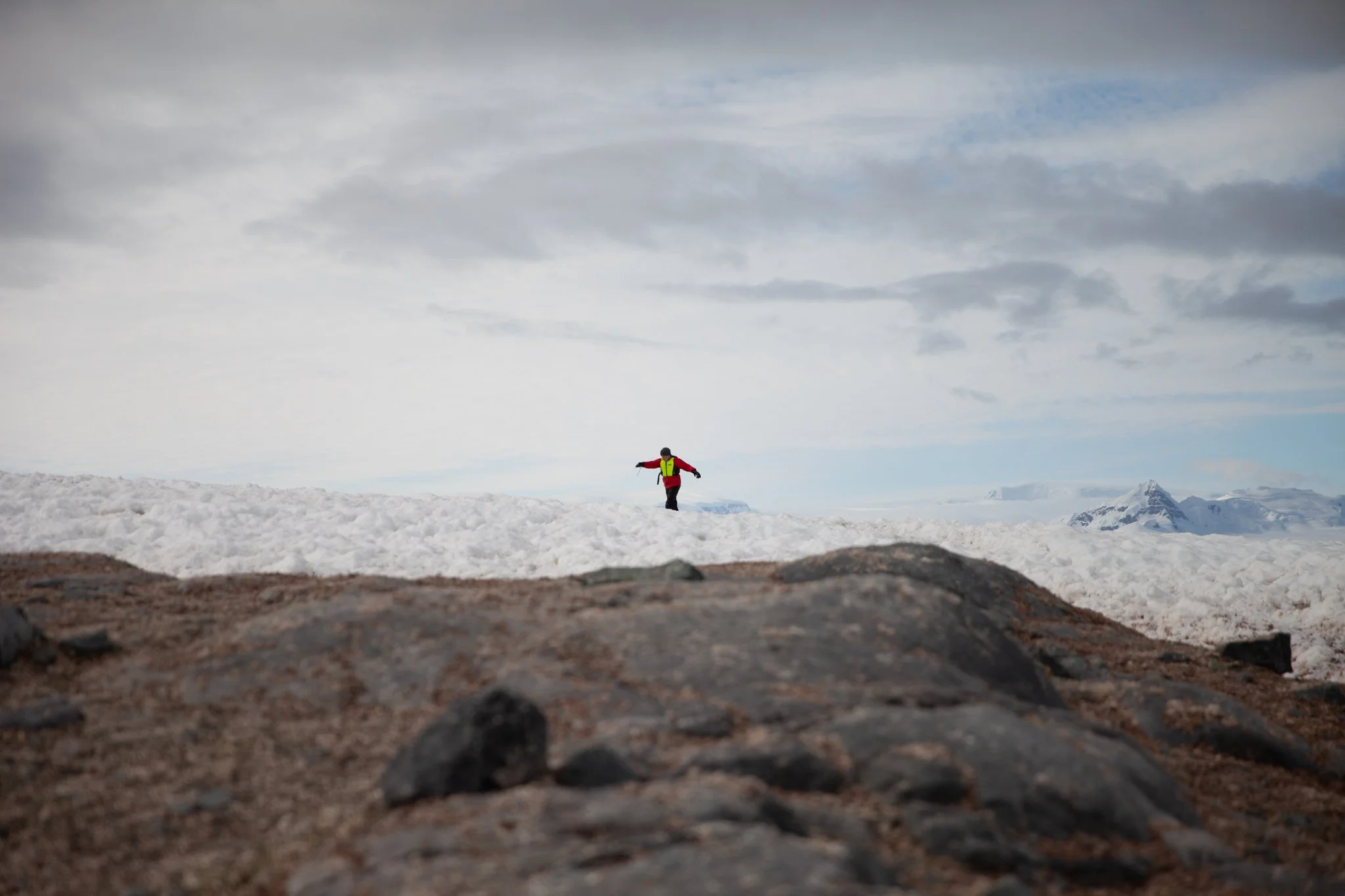
Edward exploring. Photo Credit Lucas Krupp
In the afternoon we motored out, heading for Charlotte Bay, where we celebrated with a fine dinner with wine. The next day, while the skiing party went ashore, I kayaked alongside Judith and Werner, a Swiss couple, exploring the beauty of the icebergs, like a remarkable sculpture park, each uniquely formed and weathered, glowing with blue light and lit from beneath by turquoise waters.

Edward, Judith and Werner kayaking. Photo Credit Eoin Keyes
I had a bit of a shock when, admiring the icebergs, a tower of ice came crashing into the sea as one of them collapsed. I turned my stern towards the waves and enjoyed a modest surf on them.

Chinstrap Penguins on an iceberg. Photo Credit Kate Schnippering
“The ice was here, the ice was there;
The ice was all around:
It cracked and growled, and roared and howled,
Like noises in a swound!”
The next day followed a similar pattern, the skiers setting off at 4am while the rest of us enjoyed a lie in followed by more kayaking. It is just good to Be Here.
Passages from “The Rime of the Ancient Mariner” by Samuel Taylor Coleridge

Edward Gildea
Sailor, Climate Activist & Educator
